

What's Happening?
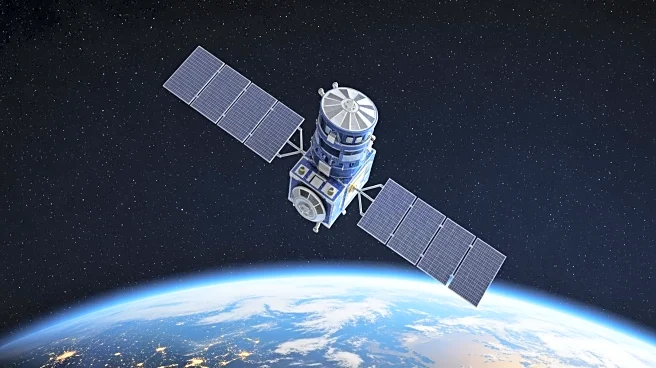
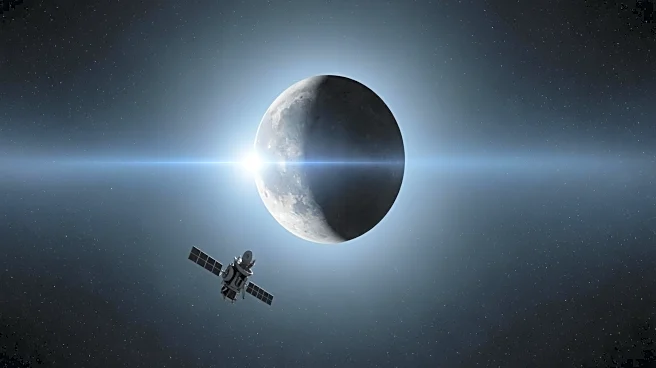
NASA's air-LUSI instrument has successfully completed a three-week mission aboard an ER-2 aircraft, using moonlight as a stable reference for calibrating space-based sensors. This mission aims to improve the accuracy of satellite sensors that monitor
Earth's ecosystems, weather patterns, and agricultural data. The Airborne Lunar Spectral Irradiance (air-LUSI) project, a collaboration involving multiple institutions, uses the Moon's consistent brightness as a calibration point, reducing the need for expensive onboard calibration equipment.
Why It's Important?
The use of moonlight for sensor calibration represents a significant advancement in satellite technology, potentially enhancing the accuracy of data used in environmental monitoring and climate research. This approach could lead to more reliable Earth observation data, supporting better-informed decisions in agriculture, disaster management, and climate policy. By reducing the need for additional calibration equipment, the project also offers a cost-effective solution for maintaining sensor accuracy.
What's Next?
The air-LUSI project is expected to continue refining its calibration techniques, potentially expanding its application to other satellite missions. The success of this mission may encourage further research into alternative calibration methods, enhancing the overall reliability of space-based observations. Continued collaboration among international scientific institutions will be crucial in advancing these efforts.
Beyond the Headlines
This project highlights the innovative use of natural resources, like moonlight, in scientific research, demonstrating the potential for sustainable practices in space exploration. It also underscores the importance of international collaboration in advancing scientific knowledge and technology.