



What's Happening?
Representatives from the offices of Senator John Fetterman, Senator Dave McCormick, and Representative Lloyd Smucker convened at the Rohrer family farm in Strasburg, Lancaster County, Pennsylvania. The purpose of the visit was to observe and understand
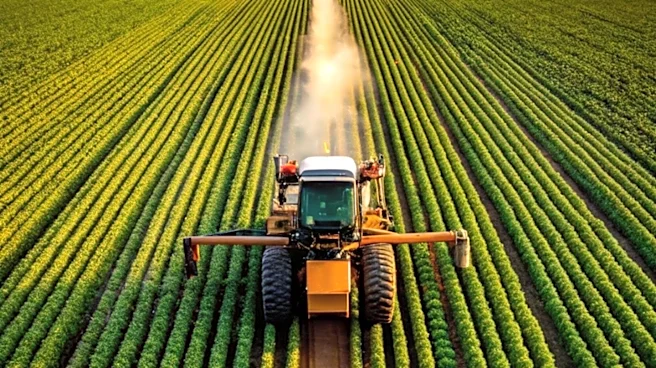
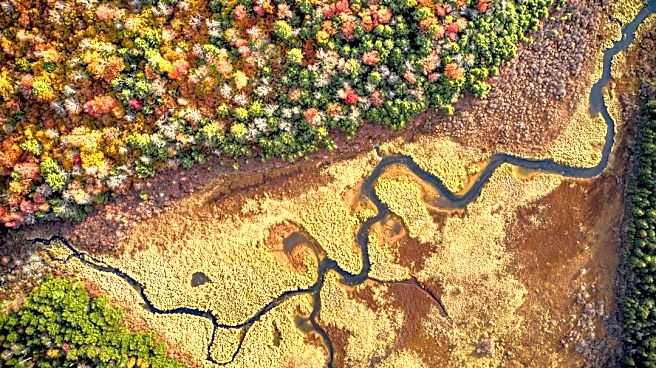
the impact of federally funded conservation programs on local agriculture. Roger Rohrer, who manages the farm, has been recognized as a Chesapeake Bay Champion for his long-standing commitment to sustainable and regenerative farming practices, including planting streamside trees since 2000. These conservation efforts, particularly forested riparian buffers, are crucial for environmental benefits such as reducing runoff, filtering pollution, and providing wildlife habitat. The projects on the Rohrer farm were made possible through Conservation Reserve Enhancement Program (CREP) funding from the USDA, which allowed for the conversion of ineffective cropland to tree cover, leading to reduced nutrient runoff and financial benefits for the farmer.
Why It's Important?
The congressional visit underscores the critical role of federal investment in agricultural conservation for the health of Pennsylvania's waterways and the broader Chesapeake Bay ecosystem. As highlighted by Julia Krall, Pennsylvania Executive Director of the Chesapeake Bay Foundation, consistent and adequate federal funding for farm conservation work is essential for achieving cleaner rivers and streams. These programs not only support farmers in implementing environmentally beneficial practices but also contribute to the economic well-being of local communities. By providing resources for projects like riparian buffers, the government helps farmers improve their land, reduce pollution, and create habitats, demonstrating a tangible return on investment for both the environment and agricultural stakeholders. The participation of representatives from both sides of the political spectrum suggests a bipartisan recognition of the importance of these initiatives.
What's Next?
The continued emphasis on federally funded conservation programs suggests ongoing efforts to secure and potentially expand such funding. Advocacy groups like the Chesapeake Bay Foundation will likely continue to press for adequate and consistent financial support for farmers engaged in conservation. The success stories from farms like the Rohrer family's could serve as models and arguments for future policy decisions and budget allocations. Lawmakers, including Representative Smucker, may use these examples to champion legislation or appropriations that further strengthen agricultural conservation initiatives, aiming to achieve broader environmental goals and support the agricultural sector in Pennsylvania and beyond. The focus will remain on ensuring that federal programs provide the necessary resources for farmers to implement and maintain sustainable practices.
Beyond the Headlines
This event highlights a broader shift towards integrating environmental stewardship with agricultural practices, moving beyond traditional farming methods to embrace regenerative and sustainable approaches. The collaboration between federal legislative offices and local farmers, facilitated by organizations like the Chesapeake Bay Foundation, exemplifies a multi-stakeholder approach to addressing complex environmental challenges. It also touches upon the ethical dimension of land use, where farmers are increasingly seen not just as food producers but as stewards of natural resources. The long-term implications include improved water quality, enhanced biodiversity, and potentially more resilient agricultural systems in the face of climate change. This model of federal support for local conservation efforts could inspire similar initiatives in other regions facing environmental degradation due to agricultural runoff.