








What's Happening?
The Organisation for Economic Cooperation and Development (OECD) has revised its global growth forecast downward, citing the ongoing U.S.-Iran conflict as a significant factor. The OECD's June Economic Outlook projects global growth to decelerate from
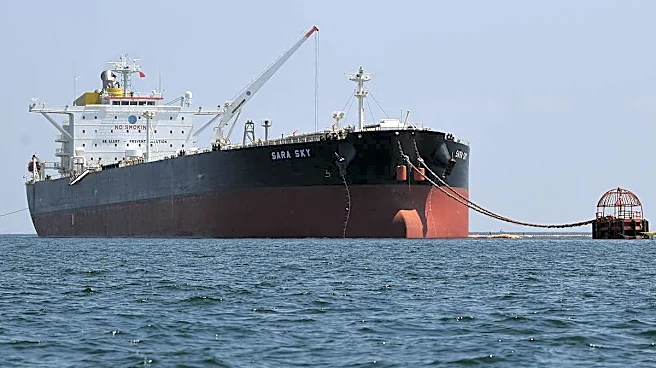
3.4% in 2025 to 2.8% in 2026, with a potential recovery to 3.1% in 2027, contingent upon a resolution to the current energy price shock. The report highlights the critical role of the Strait of Hormuz, a vital shipping route, which has been disrupted due to the conflict, leading to increased energy prices and affecting industrial inputs like fertilizers. Stefano Scarpetta, the OECD's chief economist, emphasized that prolonged disruptions could further reduce global growth to 2.1% in 2026 and 1.8% in 2027, potentially pushing some economies into recession.
Why It's Important?
The OECD's warning underscores the far-reaching economic implications of geopolitical conflicts, particularly those involving major energy routes. The U.S.-Iran conflict has not only escalated energy prices but also strained global supply chains, affecting countries differently based on their energy reserves and dependencies. For instance, while nations like Japan and South Korea may manage due to their reserves, others like India are already rationing gas. The prolonged conflict could exacerbate inflation, weaken investment, and increase unemployment globally. The situation highlights the interconnectedness of global economies and the potential for regional conflicts to have widespread economic repercussions.
What's Next?
The OECD suggests that a durable peace settlement is crucial to mitigate the economic damage and stabilize global markets. If the conflict continues, the economic and social costs are expected to rise, with inflation potentially increasing by 0.4 percentage points in 2026 and 1.3 percentage points in 2027. Stakeholders, including governments and international organizations, may need to engage in diplomatic efforts to resolve the conflict and restore stability to the affected regions. Additionally, countries may need to explore alternative energy sources and strategies to reduce dependency on vulnerable supply routes.