
What's Happening?
A SpaceX Falcon 9 rocket's upper stage is expected to crash into the Moon on August 5, 2026. This prediction comes from Bill Gray, an independent astronomer who uses the Project Pluto software to track
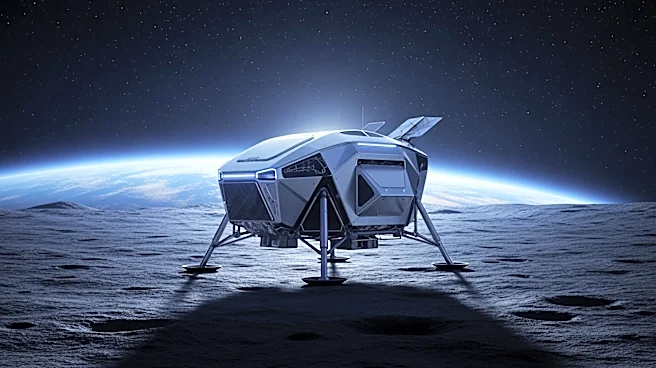
near-Earth objects. The rocket stage, designated 2025-010D, was launched in January 2025 and is currently in an elliptical orbit around Earth. Unlike previous Falcon 9 launches where the second stages either fell back to Earth or entered solar orbits, this stage remains in a trajectory that intersects with the Moon's gravitational path. The impact is expected to occur near the Einstein crater on the Moon's surface. This event highlights the growing issue of space debris, as the Moon is already littered with technological waste from past missions.
Why It's Important?
The impending collision of the SpaceX rocket stage with the Moon underscores the increasing problem of space debris. As more missions are launched, the accumulation of space junk poses potential risks to future lunar missions and satellites. The Artemis program, which aims to establish a long-term human presence on the Moon, could be affected by such debris. The collision also raises questions about the sustainability of current space exploration practices and the need for better management of space waste. The incident serves as a reminder of the potential hazards that space debris can pose to both current and future space activities.
What's Next?
Following the predicted impact, there may be increased scrutiny on space debris management practices. Space agencies and private companies might be prompted to develop more sustainable methods for disposing of rocket stages and other space debris. The Lunar Reconnaissance Orbiter may capture images of the impact site, providing valuable data for scientists. Additionally, the event could lead to discussions on international regulations and guidelines to mitigate space debris and ensure the safety of future lunar and space missions.