



What's Happening?
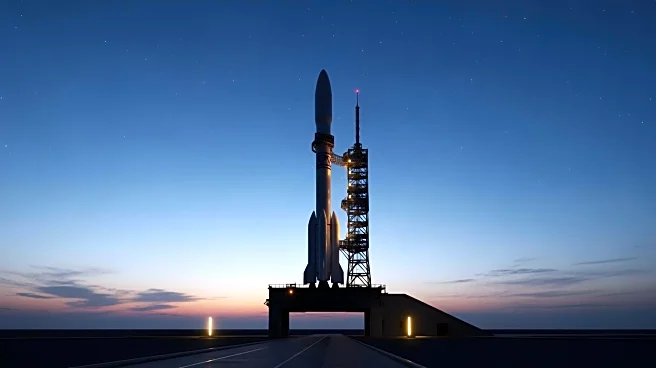
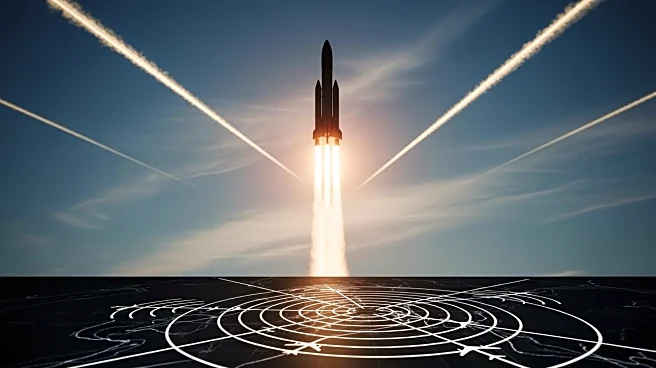
On December 17, 2025, Europe marked a significant milestone in its space exploration efforts with the successful launch of two Galileo navigation satellites aboard the Ariane 6 rocket. This launch, conducted by Arianespace from Kourou, French Guiana,
signifies Europe's growing autonomy in space capabilities, moving away from reliance on external providers. The Galileo satellites are part of the European Union's initiative to establish an independent global navigation satellite system, competing with the American GPS. The satellites will undergo system checks before entering their final orbital positions, providing enhanced global positioning services. This development follows the retirement of the Ariane 5 rocket and the cessation of Soyuz launches due to geopolitical tensions, with SpaceX's Falcon 9 temporarily filling the gap. The Ariane 6 rocket, now fully operational, represents Europe's readiness to independently manage its satellite navigation future.
Why It's Important?
The successful launch of the Ariane 6 rocket with Galileo satellites is a pivotal step for Europe in achieving space independence. This move reduces Europe's reliance on foreign GNSS providers, which is crucial for economic, security, and geopolitical reasons. The Galileo system enhances global positioning services, impacting sectors like transportation and telecommunications. The Ariane 6 rocket's capability to handle larger payloads positions Europe as a competitive player in the global space industry, offering an alternative to other heavy-lift vehicles. This development aligns with Europe's broader ambitions in space exploration, strengthening its influence and autonomy on the international stage.