




What's Happening?
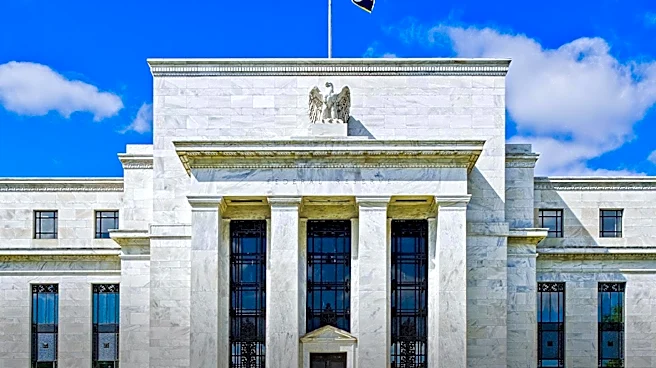
President Trump has renewed threats to halt trade with America's top partners unless the Federal Reserve cuts interest rates. This statement follows a surprisingly strong August jobs report, which indicated that the Federal Reserve might consider hiking
rates at its next meeting. U.S. markets were closed for Labor Day, but the jobs data, showing an increase of 162,000 nonfarm payrolls in August, significantly exceeded expectations. This robust employment data has fueled speculation about a potential rate hike, leading to increased pressure from President Trump on the Fed's monetary policy decisions. The President's stance introduces a new layer of uncertainty into the economic outlook, particularly concerning international trade relations and domestic financial markets.
Why It's Important?
President Trump's threats to halt trade with major partners carry significant implications for the U.S. economy and global trade relations. Such actions could disrupt established supply chains, impact American businesses reliant on international trade, and potentially lead to retaliatory measures from affected countries. A trade halt could also exacerbate inflationary pressures or create economic instability, contradicting the Federal Reserve's efforts to manage the economy through interest rate adjustments. For consumers, increased trade tensions could result in higher prices for imported goods and reduced availability of certain products. The President's direct intervention in monetary policy also raises questions about the independence of the Federal Reserve, a cornerstone of economic stability. This situation highlights a potential conflict between political objectives and economic policy, with broad consequences for various sectors of the U.S. economy.
What's Next?
The immediate focus will be on the Federal Reserve's next meeting and its decision regarding interest rates, especially in light of the strong August jobs report and President Trump's public pressure. Market participants will closely monitor any statements from the Fed for indications of their policy direction. Additionally, reactions from America's trade partners to President Trump's threats will be crucial. Any concrete steps towards implementing trade halts could trigger diplomatic and economic responses, further escalating tensions. Businesses and investors will be watching for clarity on trade policy and monetary decisions to adjust their strategies. The upcoming U.S. inflation releases, including the Producer Price Index (PPI) and Consumer Price Index (CPI), will also be key in shaping expectations for the Fed's actions and potentially influencing President Trump's rhetoric.
Beyond the Headlines
The ongoing tension between President Trump and the Federal Reserve underscores a broader debate about the balance between political influence and central bank independence. Historically, the Federal Reserve has operated with a degree of autonomy to make decisions based on economic data, free from direct political interference. President Trump's repeated public demands for rate cuts challenge this tradition, potentially setting a precedent for future administrations. This dynamic could lead to increased market volatility as investors grapple with unpredictable policy shifts. Furthermore, the threat of trade wars, even if not fully realized, can erode international trust and cooperation, impacting long-term economic growth and global stability. The situation also highlights the complex interplay between domestic economic indicators, presidential policy, and international trade, creating a challenging environment for businesses and policymakers alike.