
What's Happening?
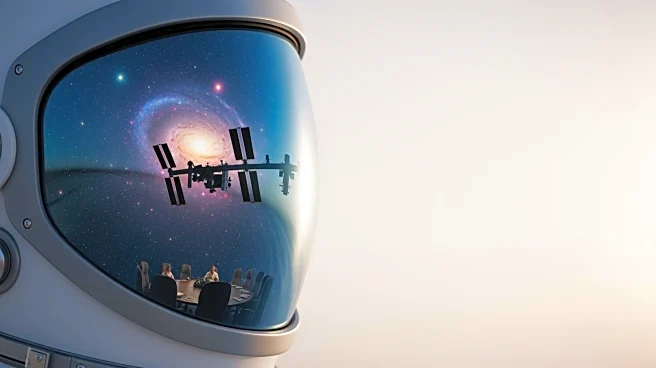
NASA has announced that astronauts will perform two spacewalks on January 8 and January 15, 2026, at the International Space Station (ISS). These spacewalks, numbered 94 and 95, are part of ongoing efforts
to maintain and upgrade the ISS. The first spacewalk will involve astronauts Mike Fincke and Zena Cardman, who will exit the station's Quest airlock to prepare the 2A power channel for the installation of new solar arrays. This will enhance the station's power capabilities, crucial for its operations and eventual deorbit. The second spacewalk will focus on replacing a high-definition camera, installing a new navigational aid, and relocating an ammonia servicer jumper. NASA will provide live coverage of these events on various platforms, including NASA+, Amazon Prime, and YouTube.
Why It's Important?
These spacewalks are significant as they ensure the continued functionality and safety of the ISS, which is a critical platform for international scientific research and collaboration. The upgrades will enhance the station's power systems, supporting its various scientific and operational needs. The spacewalks also demonstrate NASA's commitment to maintaining the ISS as a hub for space exploration and research. The involvement of astronauts like Mike Fincke, who is tying the record for most NASA spacewalks, highlights the expertise and experience required for such complex operations. The success of these missions could influence future space exploration strategies and international partnerships.
What's Next?
Following the spacewalks, NASA will continue to focus on the ISS's maintenance and scientific missions. The new solar arrays will be installed in future missions, further enhancing the station's capabilities. The outcomes of these spacewalks may also inform the planning and execution of future missions, including those under NASA's Artemis program, which aims to return humans to the Moon. Additionally, the success of these operations could bolster international cooperation in space exploration, as the ISS serves as a model for collaborative efforts in space.