







What's Happening?
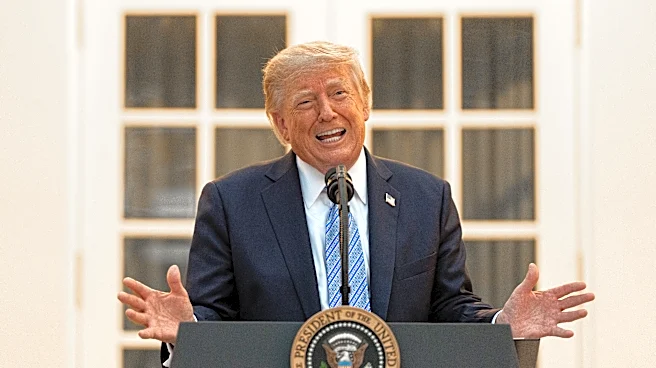
President Trump has announced the extension of Most Favored Nation (MFN) drug pricing to every Medicaid program across the United States. This initiative aims to significantly reduce prescription drug costs for Americans, building on previous efforts
by the administration. According to the White House, this expansion means that all 50 states, the District of Columbia, and Puerto Rico will now benefit from MFN pricing, which is projected to unlock nearly $65 billion in Medicaid drug savings over the next decade. The administration claims that this move will provide substantial relief for low-income families, children, seniors, and individuals with disabilities, while also benefiting taxpayers. President Trump stated that prescription drug prices have recorded their sharpest annual drop in over 60 years, with prices falling every month of 2026, attributing this success to his policies.
Why It's Important?
This policy extension is significant as it aims to address the long-standing issue of high prescription drug costs in the U.S., a concern that impacts millions of Americans and is a major component of healthcare expenditures. By extending MFN pricing to all Medicaid programs, the administration seeks to ensure that the lowest prices paid by comparable developed nations are applied to a broader segment of the U.S. population, particularly those reliant on Medicaid. The projected savings of $65 billion over ten years could free up substantial resources within state Medicaid budgets, potentially allowing for reinvestment in other healthcare services or reducing the financial burden on states. This move could also influence the pharmaceutical industry, pressuring drug manufacturers to adjust their pricing strategies in the U.S. market to align with international benchmarks. The initiative is presented as a direct benefit to vulnerable populations and a step towards making healthcare more affordable and accessible.
What's Next?
The implementation of MFN pricing across all Medicaid programs will require coordination between federal agencies, state Medicaid offices, and pharmaceutical manufacturers. States will need to integrate these new pricing structures into their existing systems, which could involve adjustments to their drug procurement and reimbursement processes. The pharmaceutical industry will likely continue to adapt to these pricing pressures, potentially leading to further negotiations or changes in how drugs are brought to market in the U.S. The administration will likely monitor the actual savings achieved and the impact on drug availability and innovation. Future policy discussions may revolve around expanding MFN pricing to other healthcare programs or exploring additional mechanisms to control drug costs. The long-term effects on pharmaceutical research and development, as well as the overall healthcare economy, will be closely watched.
Beyond the Headlines
Beyond the immediate financial implications, the extension of MFN drug pricing raises broader questions about the role of government in regulating pharmaceutical markets and the balance between affordability and innovation. While proponents argue that it ensures fair pricing and access, critics in the pharmaceutical industry may contend that such policies could stifle research and development, leading to fewer new drugs. This initiative also highlights the ongoing debate about the unique pricing structures within the U.S. pharmaceutical market compared to other developed nations. The policy could set a precedent for future government interventions aimed at controlling healthcare costs, potentially leading to a more regulated environment for drug pricing. Furthermore, it underscores the political salience of prescription drug costs, making it a recurring theme in public discourse and electoral campaigns, as both parties seek to demonstrate their commitment to lowering healthcare expenses for American citizens.