





What's Happening?
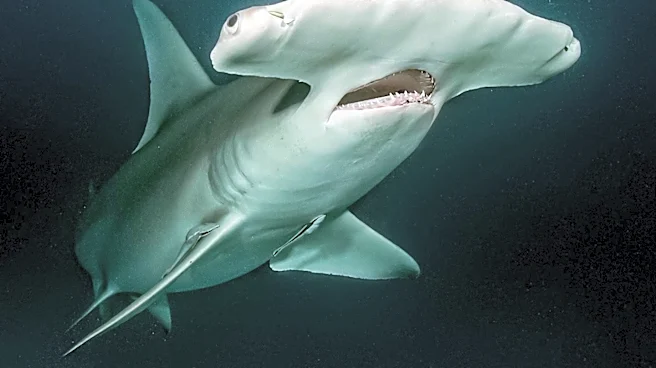
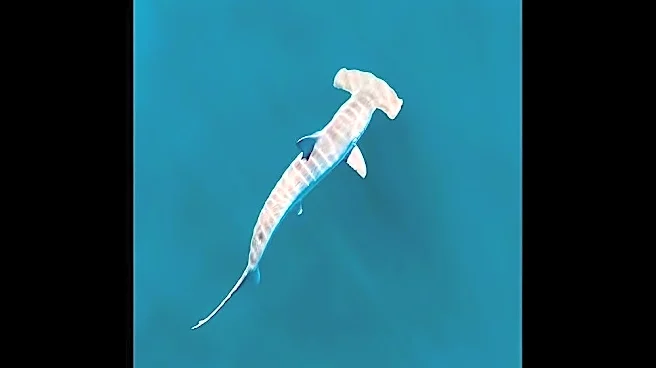
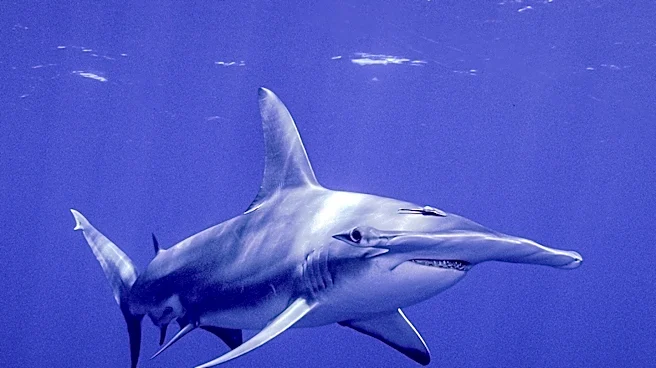
Researchers from the Atlantic Shark Institute (ASI) set out to tag sandbar sharks off the coast of Rhode Island but encountered an unexpected discovery. During their mission, a drone captured footage of a scalloped hammerhead shark, a rare sight in the area.
The ASI team, initially focused on tagging sandbar sharks, which are common in New England's waters during the summer, was surprised by the presence of the hammerhead. This discovery marks the first-ever tagging of a hammerhead shark by ASI in Rhode Island. The team successfully tagged a 6-foot-long female smooth hammerhead, allowing them to track its movements for up to a decade. This event highlights the shifting migration patterns of marine species due to rising water temperatures.
Why It's Important?
The discovery of hammerhead sharks in Rhode Island waters is significant as it indicates changing marine migration patterns, likely influenced by climate change. Hammerhead sharks, typically associated with tropical waters, are now appearing more frequently in New England. This shift could have ecological implications, affecting local marine ecosystems and fishing industries. The successful tagging of the hammerhead by ASI provides researchers with valuable data to study these changes. Understanding the movements and behaviors of hammerhead sharks can help in conservation efforts and in predicting future shifts in marine biodiversity. This research is crucial for adapting to the impacts of climate change on marine life.
What's Next?
With the successful tagging of the hammerhead shark, ASI will continue to monitor its movements along the coast. This data will contribute to a broader understanding of hammerhead migration patterns and their adaptation to changing environmental conditions. Researchers will analyze the collected data to assess the impact of climate change on marine species distribution. The findings could inform conservation strategies and policy decisions aimed at protecting marine biodiversity. Additionally, ASI's ongoing research may lead to further discoveries of other species adapting to new habitats, providing insights into the resilience of marine ecosystems.