
What's Happening?
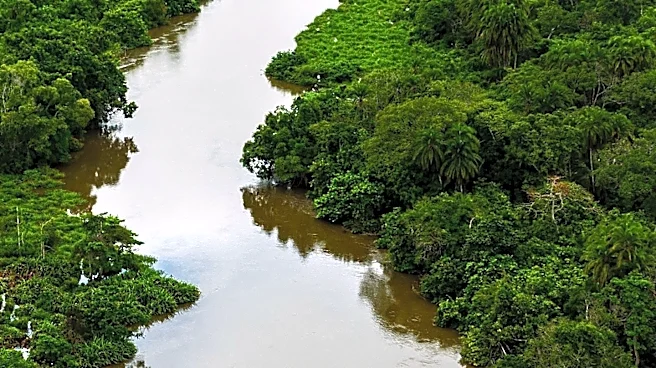
A recent study on the transboundary Tano River Basin, spanning Ghana and Côte d'Ivoire, has assessed hydro-climatic variability and drought-flood hazards from 2000 to 2024. The research utilized multi-source
Earth observation data and statistical analysis to evaluate rainfall, extreme rainfall events (Rx1day, Rx5day), consecutive dry days (CDD), and land surface temperature (LST). The findings indicate no statistically significant monotonic trends in these key hydro-climatic variables over the 24-year period. For instance, annual rainfall, maximum 1-day rainfall, maximum 5-day rainfall, consecutive dry days, and land surface temperature all showed no significant long-term directional change. The study also developed a Drought Condition Index (DCI) and an Extreme Rainfall Potential Index (ERPI) to separately analyze drought-related and extreme rainfall conditions. These indices revealed interannual variability, with some years experiencing stronger drought conditions and others higher extreme rainfall potential, but without a consistent trend. The Normalized Difference Vegetation Index (NDVI) was also analyzed, but due to sensor transitions and lack of cross-sensor harmonization, no pooled long-term trend was reported for vegetation greenness.
Why It's Important?
This study is important because it provides a detailed, data-driven understanding of climate patterns in a critical West African river basin, which has implications for water resource management and agricultural planning. The absence of significant long-term trends in rainfall and temperature suggests that while interannual variability is present, there isn't a clear directional shift towards consistently wetter, drier, hotter, or cooler conditions over the past two decades. This information is crucial for local and regional authorities in developing adaptation strategies that focus on managing variability rather than responding to a persistent trend. For instance, agricultural practices might need to be flexible to cope with fluctuating conditions year-to-year, rather than adapting to a steady increase or decrease in rainfall. The separation of drought and extreme rainfall indices also allows for more targeted risk assessments, enabling better preparedness for specific hazards. Understanding these dynamics is vital for the socio-economic resilience of communities dependent on the basin's resources, as it informs decisions on infrastructure development, disaster preparedness, and food security initiatives.
What's Next?
Future research in the Tano River Basin should focus on incorporating event-scale hydrology, exposure, and vulnerability to provide a more comprehensive understanding of disaster risk. The current study's DCI and ERPI are hazard components, not full disaster risk measures, as they do not account for exposure and vulnerability. Therefore, integrating these elements will be crucial for developing actionable risk management plans. Additionally, future work should include sensor-harmonized land-surface analyses for NDVI to enable reliable long-term trend inferences for vegetation. Daily gauge validation for extreme rainfall indices is also recommended to improve the accuracy of daily extreme event assessments. The study also highlights the need for independent impact data for predictive or causal modeling, which would allow for a better understanding of the real-world consequences of hydro-climatic variability. Coordinated hydro-climatic monitoring and data exchange between Ghana and Côte d'Ivoire are also essential for basin-wide preparedness and management.
Beyond the Headlines
The findings from the Tano River Basin study underscore a broader challenge in climate science: distinguishing between natural climate variability and long-term climate change trends. While global climate models project significant changes, regional studies like this one can reveal complex local dynamics that do not always align with broader patterns over shorter timeframes. This highlights the importance of localized, high-resolution data and analysis for effective climate adaptation. The study's emphasis on separating drought and extreme rainfall hazards also points to the need for nuanced approaches to climate risk, moving beyond generalized 'climate change' impacts to specific, actionable hazard assessments. Ethically, this research provides critical information for vulnerable communities, enabling more informed decision-making to protect livelihoods and resources. Legally and culturally, understanding these specific hydro-climatic patterns can influence transboundary water agreements and traditional resource management practices, fostering cooperation and resilience in the face of environmental challenges.