






What's Happening?
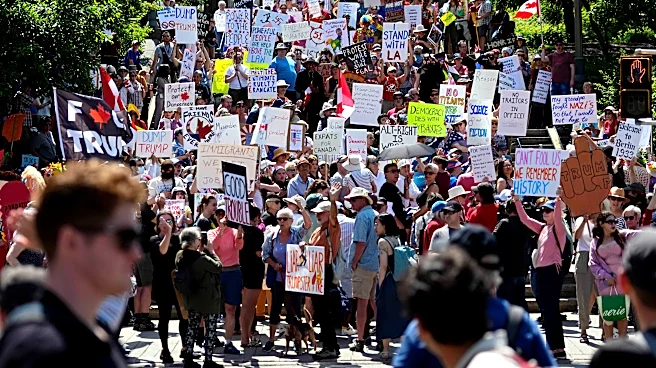
Student groups across Indonesia are organizing nationwide demonstrations for Heroes' Day, November 10, to voice their opposition to various government policies. Protests are scheduled in major cities including Jakarta, Surabaya, Yogyakarta, Banyuwangi,
and Purwokerto. The students' grievances encompass concerns over corruption, environmental degradation, and the increasing cost of living. Specific demands include the dissolution of the state investment management agency Danantara Indonesia and an end to military and police involvement in civilian affairs. These planned demonstrations follow a protest held on November 9 outside the office of Vice President Gibran Rakabuming Raka in Jakarta, where dozens of demonstrators gathered. Vice Presidential Secretary Al Muktabar stated that Vice President Raka had instructed officials to allow protesters to enter for dialogue, but the protesters declined the invitation, choosing to remain outside the compound.
Why It's Important?
These widespread student protests highlight significant public discontent with the Indonesian government's policies and governance. The issues raised—corruption, environmental damage, and cost of living—are fundamental concerns that can impact social stability and economic development. The call for the dissolution of Danantara Indonesia suggests a lack of trust in state-managed investment entities, potentially affecting investor confidence and the government's ability to implement economic programs. Furthermore, the demand to limit military and police involvement in civilian affairs points to broader concerns about civil liberties and democratic principles. The refusal of protesters to engage in dialogue within the Vice Presidential Palace, despite an invitation, underscores a potential breakdown in communication channels between the government and a segment of its populace, indicating deep-seated grievances that may not be easily resolved through official channels.
What's Next?
The planned Heroes' Day protests are expected to proceed across multiple Indonesian cities, potentially leading to significant public gatherings and disruptions. The government will likely monitor these demonstrations closely, and its response could shape future interactions with student and activist groups. The continued refusal of protesters to engage in direct dialogue with government officials, as seen with Vice President Raka's office, suggests that the issues may escalate if not addressed to the satisfaction of the demonstrators. The outcome of these protests could influence public opinion, potentially impacting the government's approval ratings and its ability to push through controversial policies. Further, the focus on specific entities like Danantara Indonesia could lead to increased scrutiny of state-owned enterprises and their operations.
Beyond the Headlines
The recurring nature of student protests in Indonesia, particularly on significant national days like Heroes' Day, reflects a historical tradition of student activism playing a crucial role in the country's political landscape. This wave of protests could signify a growing disillusionment among the youth regarding the direction of the country, potentially fostering a new generation of political engagement. The emphasis on environmental damage and the cost of living also points to the intersection of economic policy with social and ecological concerns, suggesting that future political discourse in Indonesia may increasingly revolve around sustainable development and equitable resource distribution. The government's handling of these protests will be a critical test of its commitment to democratic freedoms and its capacity to address complex societal challenges.