





What's Happening?
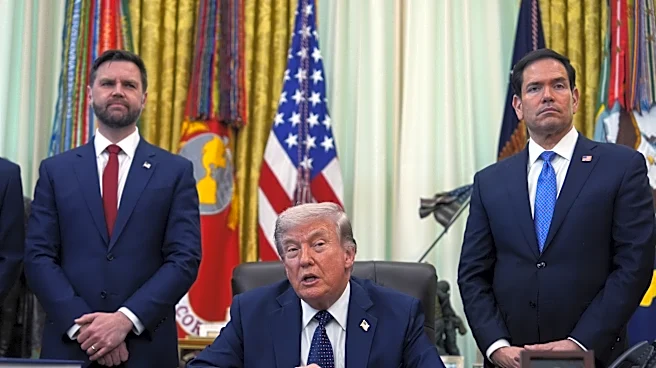
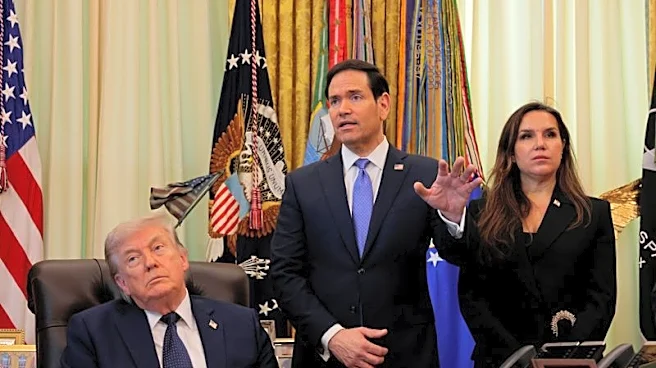
The United States is facilitating talks between Lebanon and Israel, with President Trump hosting the negotiating teams in Washington. The discussions aim to extend a ceasefire and address ongoing tensions, with a focus on Hezbollah's role in the conflict.
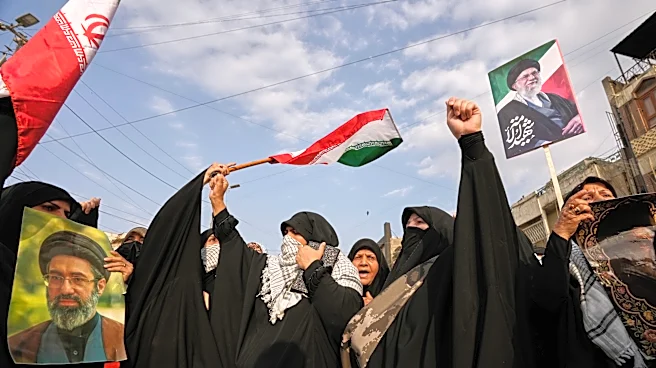
The talks, which are the first official meetings between the two countries since 1983, have resulted in an agreement to extend the ceasefire for an additional three weeks. However, the primary issue of Hezbollah's influence remains a significant obstacle. U.S. officials, including Vice President JD Vance and Secretary of State Marco Rubio, are involved in the negotiations, emphasizing the need to address Hezbollah's activities. Israeli officials have stressed that any progress in talks must involve efforts to curb Hezbollah's power, which they view as the main threat to regional stability.
Why It's Important?
The involvement of the U.S. in these talks highlights its strategic interest in stabilizing the Middle East and reducing the influence of groups like Hezbollah, which is backed by Iran. The outcome of these negotiations could have significant implications for regional security, potentially leading to a reduction in hostilities and a more stable geopolitical environment. For Lebanon, addressing Hezbollah's role is crucial for regaining sovereignty and reducing external influences. The talks also reflect a broader U.S. strategy to support allies like Israel while encouraging diplomatic solutions to long-standing conflicts. Success in these negotiations could enhance U.S. credibility as a peace broker in the region.
What's Next?
The continuation of the ceasefire and further talks will depend on the willingness of both Lebanon and Israel to address the core issue of Hezbollah's influence. The U.S. may need to apply diplomatic pressure on Lebanon to take concrete steps against Hezbollah, potentially offering incentives for compliance. The outcome of these talks could set a precedent for future negotiations in the region, influencing how other conflicts are approached. If successful, the talks could lead to a broader peace agreement, reducing the risk of future conflicts and enhancing regional stability.