
What's Happening?
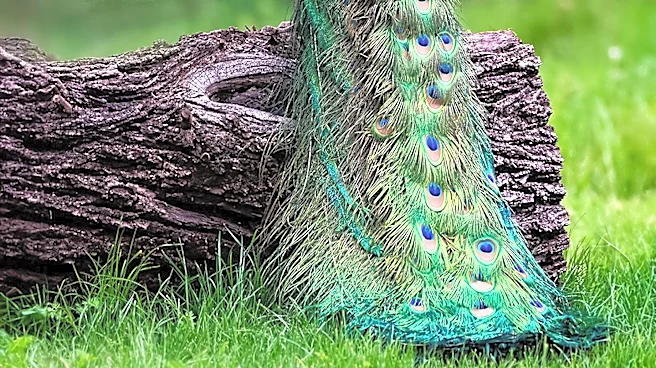
A nearly 9-foot Burmese python recently swallowed a pet peacock named Violet in a residential yard in Golden Gate Estates, Florida. Wildlife handlers intervened, removing the snake, but the incident underscores
the increasing presence of these invasive constrictors in suburban areas. The python had already consumed half of the peacock when an agent arrived. This event is part of a broader trend where Burmese pythons are expanding their range beyond remote marshlands directly into human-populated boundaries. Biologists have documented these pythons consuming over 40 distinct native wildlife species, including American alligators and white-tailed deer, demonstrating their significant impact on regional biodiversity. The unique skull anatomy of pythons, with lower jaws connected by an elastic ligament and flexible joints, allows them to swallow prey much larger than their own body mass.
Why It's Important?
The incident in Golden Gate Estates highlights a critical ecological and public safety issue in Florida: the unchecked expansion of invasive Burmese pythons into residential areas. This poses a direct threat to domestic animals and local wildlife, disrupting the delicate balance of ecosystems. The predation of a pet peacock in a suburban backyard signifies an escalation in human-wildlife conflicts, as urban development encroaches further into natural habitats. The pythons' ability to consume large native species, including apex predators like alligators and large mammals like deer, indicates their profound impact on the food chain and biodiversity. This situation places a significant burden on wildlife management agencies like the Florida Fish and Wildlife Conservation Commission (FWC), which is actively engaged in removal operations to mitigate ecological damage. The FWC's policy allowing homeowners to remove and euthanize pythons on private land without a permit reflects the severity of the problem and the need for public involvement in controlling the invasive population.
What's Next?
The Florida Fish and Wildlife Conservation Commission (FWC) will likely continue its active removal operations to curb the ecological damage caused by Burmese pythons. Homeowners in Florida, particularly those near wetland fringes, are permitted to humanely remove and euthanize invasive pythons on private land year-round without a permit or hunting license. This policy is expected to remain in effect as suburban encroachment continues to bring humans and pythons into closer contact. Residents are advised to take preventative measures, such as reinforcing enclosures for smaller livestock and domestic animals with buried hardware cloth and heavy latches, and keeping tall grasses trimmed and clearing dense backyard debris to eliminate potential ambush cover for large reptiles. The FWC and other wildlife managers will likely continue to monitor the spread of these pythons and adapt their strategies to manage the increasing human-wildlife conflicts.
Beyond the Headlines
The incident with the peacock and python in Florida points to a larger, systemic issue of invasive species management and the consequences of human expansion into natural habitats. The Burmese python's success as an invasive predator in Florida is a stark example of how non-native species can decimate local ecosystems, leading to significant biodiversity loss. The ethical considerations surrounding the removal and euthanasia of these animals, while necessary for ecological balance, also raise questions about human responsibility in introducing and managing such species. This situation also highlights the broader challenge of balancing urban development with environmental conservation. As residential areas continue to expand, the interface between human settlements and wildlife habitats becomes increasingly blurred, leading to more frequent and often dramatic encounters. The long-term implications include potential shifts in local wildlife populations, increased costs for wildlife management, and a continuous need for public education on coexisting with or managing invasive species.