
What's Happening?
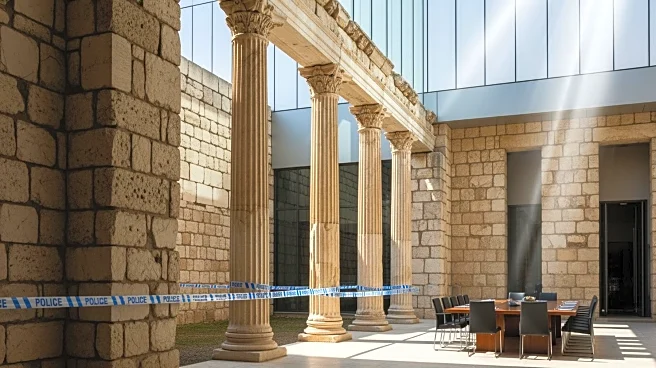
A TikTok video showcasing ancient stone ruins preserved inside an H&M store on the Greek island of Rhodes has gained significant attention online. The video, posted by a user who recently moved from the United
States to Rhodes, highlights the unique integration of historical artifacts within a modern retail environment. The store's design intentionally incorporates these ancient stones, which are prominently displayed and cordoned off within the shop. According to an H&M spokesperson, the store's layout was developed in collaboration with the Greek Ministry of Culture to ensure the ruins remain protected and respected. This approach reflects the intersection of history and modern life in Greece, where ancient structures are often part of everyday surroundings.
Why It's Important?
The integration of ancient ruins within a retail space underscores the importance of preserving cultural heritage while accommodating modern commercial needs. This approach by H&M highlights a growing trend in retail design that respects and incorporates local history and culture. It serves as a model for other businesses operating in historically rich areas, demonstrating that commercial development can coexist with heritage conservation. The positive reception from social media users suggests a public appreciation for efforts that prioritize cultural preservation over commercial expansion. This could influence future retail and construction projects, encouraging more companies to adopt similar practices.
What's Next?
The successful integration of historical elements into the H&M store may inspire other retailers and developers to consider similar approaches in historically significant locations. As public interest in cultural preservation grows, businesses might face increased pressure to incorporate local heritage into their designs. This trend could lead to more collaborations between commercial entities and cultural institutions, ensuring that development projects respect and preserve historical sites. Additionally, the positive feedback from social media could prompt H&M to explore similar designs in other locations, further promoting the coexistence of modern retail and ancient history.
Beyond the Headlines
The presence of ancient ruins within a retail space raises questions about the ethical responsibilities of businesses operating in culturally significant areas. It challenges the notion of commercial spaces as purely functional environments, suggesting they can also serve as platforms for cultural education and preservation. This development may encourage a broader discussion on the role of businesses in safeguarding cultural heritage, potentially influencing policy decisions regarding construction and development in historical regions. The approach taken by H&M could set a precedent for how companies balance commercial interests with cultural responsibilities.