



What's Happening?
President Donald Trump has announced a potential 5% tariff on Mexico if it fails to provide additional water to U.S. farmers, citing violations of a water-sharing treaty. The treaty requires Mexico to send 1.75 million acre-feet of water to the U.S. every
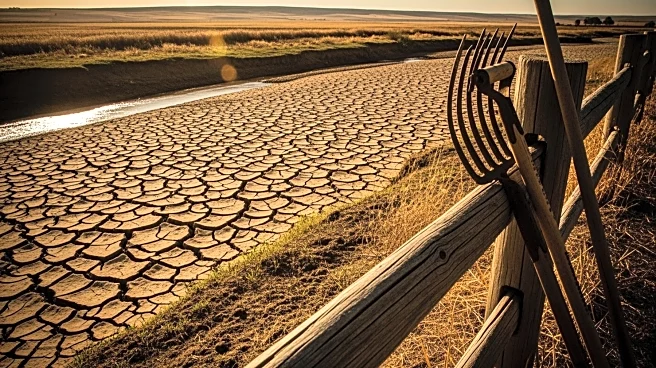
five years. Trump claims Mexico owes 800,000 acre-feet due to past violations and demands 200,000 acre-feet be released by December 31. The water shortage is reportedly affecting crops and livestock in Texas. Mexico, facing drought conditions, has not yet responded to these demands. The U.S. Agriculture Secretary previously stated that Mexico agreed to increase water shipments to Texas.
Why It's Important?
The dispute highlights the critical nature of water resources in international relations and agriculture. Texas farmers are directly impacted by the water shortage, which could affect crop yields and livestock health, potentially leading to economic losses. The tariff threat could strain U.S.-Mexico relations further, impacting trade and diplomatic ties. This situation underscores the importance of international treaties in managing shared natural resources and the potential consequences when such agreements are perceived to be violated.
What's Next?
If Mexico does not comply with the water release demands, the U.S. may proceed with the tariff, which could lead to retaliatory measures from Mexico. This could escalate into a broader trade conflict, affecting various sectors beyond agriculture. Diplomatic negotiations may be necessary to resolve the issue and prevent further economic and political fallout. The situation also calls for potential revisions or enforcement mechanisms in the existing treaty to address compliance and resource management more effectively.