






What's Happening?
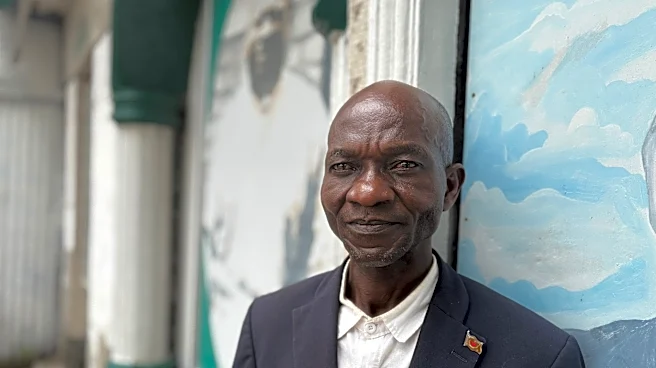
The Kimbanguist Church, founded by Simon Kimbangu, has become a significant religious movement in the Democratic Republic of the Congo, offering existential lessons for the nation amid its current territorial crisis. Kimbangu, who spent 30 years in jail
under Belgian colonial rule, is revered as a symbol of Black liberation. His church, known for its nonviolent and independent stance, has grown to millions of followers, primarily in Congo. The church's teachings emphasize peace, community, and the empowerment of women, contrasting with the ongoing instability in eastern Congo due to the M23 rebellion. This movement is seen as a potential model for Congo's leaders, who face challenges in maintaining sovereignty and addressing the mineral-rich region's conflicts.
Why It's Important?
The Kimbanguist Church's influence highlights the role of religious movements in shaping social and political landscapes in Congo. As the nation grapples with the M23 rebellion and territorial disputes, the church's emphasis on nonviolence and community cohesion offers a framework for addressing these issues. President Félix Tshisekedi's engagement with the church, including appointing a Kimbanguist prime minister, underscores its political significance. The church's values could inspire leaders to prioritize national unity and sovereignty, especially as Congo negotiates mineral partnerships with international entities like the U.S., which could impact its economic and political future.
What's Next?
Congo's leaders may continue to seek guidance from the Kimbanguist Church as they navigate the territorial crisis and international negotiations. The church's growing influence could lead to increased political engagement and advocacy for peaceful resolutions. The government's mineral partnership with the U.S. may face scrutiny from critics concerned about sovereignty, potentially prompting further debate and policy adjustments. The church's role in promoting social cohesion and empowerment may also expand, influencing broader societal changes in Congo.
Beyond the Headlines
The Kimbanguist Church's teachings challenge traditional power structures and offer a vision of African leadership rooted in sacrifice and community service. This movement's emphasis on Black liberation and empowerment resonates with broader global discussions on racial justice and decolonization. The church's impact on Congo's political landscape could inspire similar movements across Africa, advocating for independence and self-determination. As Congo faces external pressures and internal conflicts, the church's legacy may serve as a catalyst for transformative change.