

What's Happening?
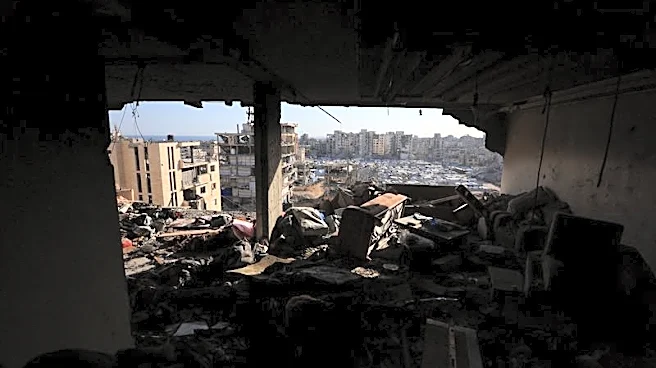
The United States has initiated new military strikes on Iranian sites in response to recent Iranian attacks on ships navigating the Strait of Hormuz and on U.S. allies in the Gulf region. These developments have further strained the already fragile ceasefire
between the U.S. and Iran. Despite these tensions, President Trump has indicated that a peace deal could potentially be reached over the weekend. The situation remains volatile as both nations engage in military actions that could escalate the conflict. NBC News' Matt Bradley reports from the Middle East, highlighting the precarious nature of the current geopolitical landscape.
Why It's Important?
The escalation of military actions between the U.S. and Iran underscores the ongoing volatility in the Middle East, a region critical to global energy supplies and geopolitical stability. The Strait of Hormuz is a vital waterway for oil transportation, and any disruption could have significant implications for global oil markets and economic stability. The U.S.'s response to Iranian aggression reflects its commitment to protecting its allies and maintaining regional security. However, the potential for further conflict poses risks to international relations and could impact diplomatic efforts aimed at achieving long-term peace in the region.
What's Next?
The immediate future may see increased diplomatic efforts to de-escalate tensions, with President Trump suggesting the possibility of a peace deal. However, the continuation of military actions could lead to further retaliatory strikes, complicating peace negotiations. Key stakeholders, including Gulf allies and international organizations, may push for dialogue to prevent a broader conflict. The international community will likely monitor the situation closely, with potential implications for U.S. foreign policy and its relationships with both allies and adversaries in the region.