



What's Happening?
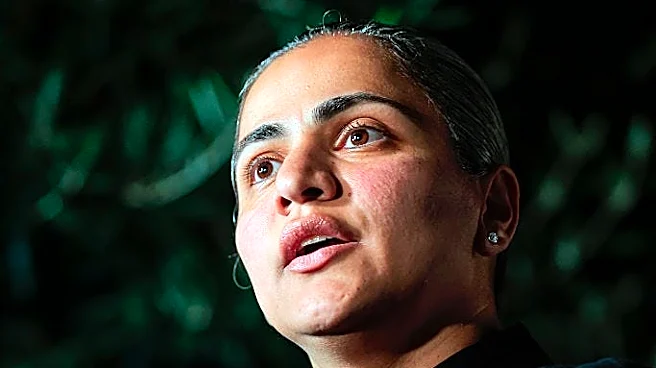
California progressive Aisha Wahab has won a congressional runoff election against AIPAC-backed moderate Melissa Hernandez in the state's 14th District. The Associated Press called the race two days after polls closed, with Wahab securing 53.1% of the votes
compared to Hernandez's 46.9%. This victory was achieved despite a significant spending push from the American Israel Public Affairs Committee (AIPAC) and its affiliated groups, which invested over $2.5 million in the final weeks to support Hernandez and run negative ads against Wahab. These ads focused on local issues like public safety and education rather than Israel. Wahab, who will be the first Afghan American in Congress, campaigned on issues such as affordability, civil rights, education, and climate change. She has been critical of Israel's operations in Gaza and supports ending U.S. aid to Israel, while also advocating for humanitarian aid and condemning Hamas.
Why It's Important?
Wahab's victory is significant as it demonstrates the growing influence of progressive voices within the Democratic Party, particularly on issues related to U.S. foreign policy and aid to Israel. The substantial financial investment by AIPAC in this local race highlights the organization's commitment to influencing U.S. elections and its concern over candidates critical of Israel. Despite AIPAC's efforts, Wahab's win suggests that progressive candidates can still succeed, even against well-funded opposition. This outcome could embolden other progressive candidates to challenge established foreign policy stances and may lead to increased debate within Congress regarding U.S. aid to Israel and the Israeli-Palestinian conflict. It also reflects a potential shift in voter sentiment, where local issues and broader progressive platforms can outweigh the impact of external spending on specific foreign policy positions.
What's Next?
Aisha Wahab will now serve the remainder of the term for the 14th District. However, she will face Melissa Hernandez again in the November general election for a full term beginning in January 2027. The upcoming election will likely see continued, and potentially intensified, campaigning from both sides, with AIPAC possibly renewing its financial support for Hernandez. The district will also gain new voters from Dublin due to redistricting, which could slightly favor Hernandez. Wahab's incumbency, however, is expected to give her an advantage. Her presence in Congress will likely contribute to ongoing discussions about U.S. foreign policy, particularly concerning the Middle East, and may inspire other progressive candidates to run on similar platforms. The race will serve as a barometer for the evolving dynamics between progressive and more centrist factions within the Democratic Party.
Beyond the Headlines
Wahab's journey 'from foster care to Congress' adds a compelling narrative to her victory, resonating with themes of social mobility and representation. Her nuanced stance on the Israeli-Palestinian conflict—criticizing Israel while also condemning Hamas and advocating for humanitarian aid—reflects a growing desire among some progressives for a more balanced and comprehensive U.S. approach to the region. The use of negative advertising by AIPAC, focusing on local issues rather than Israel, indicates a strategic adaptation to local political landscapes, attempting to influence elections without directly engaging on controversial foreign policy topics. This election also underscores the increasing role of outside money in local and national political races, raising questions about campaign finance reform and the influence of special interest groups on democratic processes.