








What's Happening?
The U.S. military has requested the deployment of the Dark Eagle hypersonic missile to the Middle East, potentially enhancing the U.S.'s long-range strike capabilities against Iran. This request, made by U.S. Central Command (CENTCOM), comes amid reports
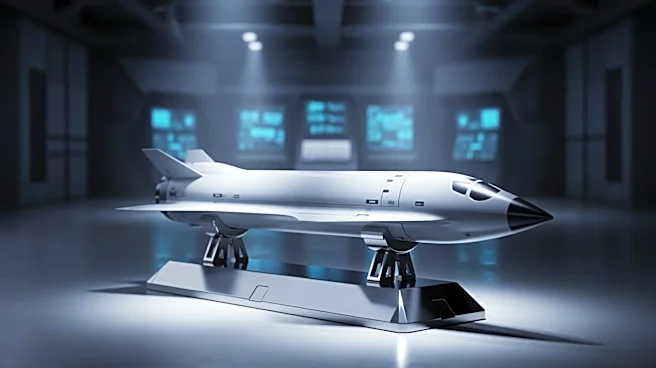
that Iranian ballistic missile launchers have been moved beyond the range of current U.S. systems. The Dark Eagle, officially known as the Long-Range Hypersonic Weapon (LRHW), is still under development and has not yet been operationally deployed. If approved, it would mark the first deployment of a U.S. hypersonic weapon, capable of targeting Iranian missile launchers and other strategic sites. The missile system, developed by Lockheed Martin, features a mobile launcher and a hypersonic glide vehicle capable of speeds exceeding Mach 5, making it difficult to intercept.
Why It's Important?
The potential deployment of the Dark Eagle missile represents a significant escalation in U.S. military capabilities in the Middle East, particularly in relation to Iran. This move could alter the strategic balance in the region, providing the U.S. with the ability to strike targets deep within Iranian territory with minimal warning. The deployment could also serve as a deterrent against Iranian military actions, particularly in the Strait of Hormuz, a critical chokepoint for global oil shipments. Additionally, the introduction of hypersonic weapons into the region underscores the ongoing arms race involving advanced missile technologies, with implications for U.S. relations with both Iran and other regional powers.
What's Next?
If the deployment is approved, the U.S. military will likely conduct further tests and preparations to ensure the operational readiness of the Dark Eagle system. This could involve coordination with regional allies and adjustments to existing military strategies. The deployment may also prompt reactions from Iran, potentially leading to increased tensions or diplomatic engagements aimed at de-escalation. Furthermore, the U.S. may use this opportunity to demonstrate its advanced military capabilities to other global powers, such as China and Russia, who are also developing hypersonic technologies.