



What's Happening?
The U.S. nuclear industry is undergoing a significant transformation by integrating advanced nondestructive evaluation (NDE) and repair technologies. This shift aims to improve outage performance, support long-term operation of nuclear assets, and maintain
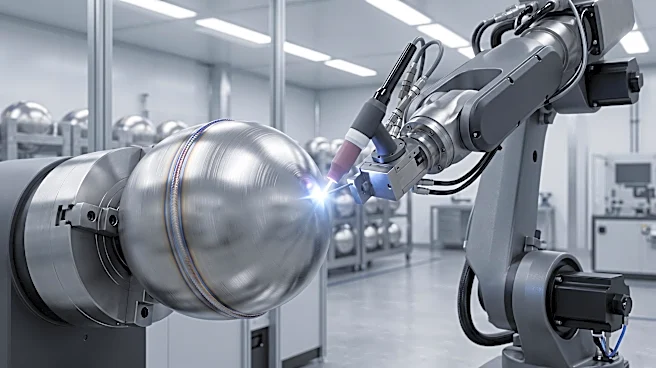
high safety and quality standards. Key advancements include the use of ultrasonic testing (UT) as an alternative to radiographic testing (RT) for weld inspection, AI-assisted analysis tools to streamline data review, and mixed-reality applications for consistent field execution. Laser ablation is also being explored for surface preparation and decontamination, while nonmetallic repair technologies are being evaluated for difficult-to-access components. A notable deployment at the Department of Energy’s Hanford Site involved a fully autonomous gas tungsten arc welding system for sealing high-activity capsules, demonstrating the practical application of these innovations in challenging environments. These technological adoptions are driven by the need to manage aging infrastructure, increasing data volumes, and complex inspection requirements while adhering to stringent regulatory codes.
Why It's Important?
These technological advancements are crucial for the sustainability and safety of the U.S. nuclear power sector. By improving inspection accuracy and efficiency, utilities can make more informed decisions regarding the structural integrity of critical components, potentially extending the operational lifespan of existing nuclear plants. The adoption of UT over RT, for instance, reduces operational disruptions by eliminating exclusion zones and radioactive sources, leading to significant schedule savings and enhanced worker safety. AI-assisted analysis drastically cuts down data review times, allowing highly trained analysts to focus on critical indications rather than sifting through vast amounts of irrelevant data. Mixed-reality tools ensure greater consistency and traceability in field operations, reducing human error and improving data management. These innovations are vital for maintaining a reliable energy supply, reducing operational costs, and ensuring the continued safe operation of nuclear facilities across the United States, especially as the industry prepares for long-term operation and new construction projects.
What's Next?
The nuclear industry is expected to continue its push towards further integration and qualification of these advanced technologies. Efforts are underway to standardize the use of UT through demonstration programs and adherence to ASME Code Case N-831-1, ensuring its widespread acceptance and rigorous application. Research into laser ablation will continue to focus on understanding its effects on material properties, worker safety, and code compliance to facilitate broader adoption. Nonmetallic repair technologies will undergo further evaluation and planned demonstrations to assess their applicability in diverse nuclear environments. The success of autonomous welding systems, like the one at Hanford, is likely to encourage similar deployments in other high-radiation or difficult-to-access areas. Future developments will also likely involve expanding AI applications to other inspection workflows and integrating mixed-reality tools more deeply into training and remote expert support systems, aiming for a more digital, intelligent, and integrated approach to nuclear asset management.
Beyond the Headlines
The embrace of these advanced technologies signifies a broader cultural and operational shift within the U.S. nuclear industry, moving towards proactive, data-driven asset management. This evolution addresses not only immediate operational challenges but also long-term strategic goals, such as preserving critical expertise in an aging workforce through digital tools and knowledge transfer mechanisms. The emphasis on reducing human exposure in hazardous environments through remote and autonomous systems highlights a commitment to worker safety that goes beyond traditional protocols. Furthermore, the ability to extend the life of existing nuclear plants through more precise inspection and repair techniques has significant implications for national energy security and climate goals, as nuclear power remains a key source of carbon-free electricity. This technological pivot also positions the U.S. nuclear sector as a leader in innovation, potentially influencing global standards and practices in nuclear safety and efficiency.