



What's Happening?
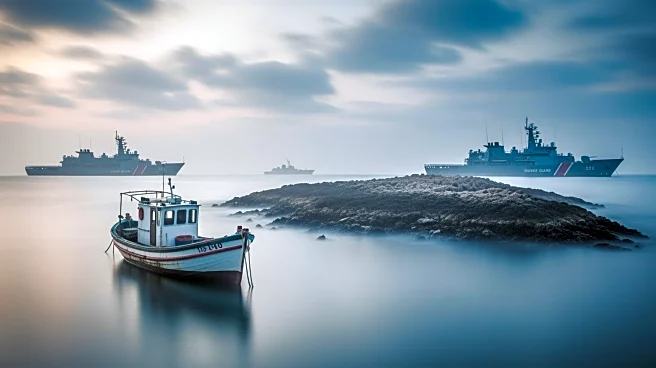
Several Filipino fishermen were injured, and their vessels were damaged when the China Coast Guard and Chinese Maritime Militia attempted to drive them away from a disputed shoal in the Spratly Islands, South China Sea. The incident occurred on December
12, when the Chinese forces used water cannons and sirens to force the Filipino fishing boats away from the Sabina (Escoda) Shoal. The Philippine Coast Guard responded to protect the fishermen and provide medical assistance. The Chinese actions, described as 'unprofessional and unlawful' by the Philippine Coast Guard, involved dangerous maneuvers, including cutting anchor lines and blocking the Filipino vessels. Approximately 300 fishermen were in the area, and the incident resulted in significant damage to two fishing boats and injuries to at least three fishermen.
Why It's Important?
This incident highlights the ongoing tensions in the South China Sea, a region with significant geopolitical importance due to its strategic location and rich natural resources. The actions of the Chinese Coast Guard underscore the aggressive tactics employed by China to assert its territorial claims, which are contested by several countries, including the Philippines. The confrontation could escalate tensions between China and the Philippines, potentially involving other nations with interests in the region. The safety and livelihood of Filipino fishermen are at risk, as they rely on these waters for their economic survival. The incident also raises concerns about the potential for military conflict in the area, which could disrupt international trade routes and impact global economic stability.
What's Next?
The Philippine government is likely to raise the issue with international bodies and seek diplomatic solutions to prevent further incidents. The Philippines may also strengthen its maritime presence in the disputed areas to protect its fishermen. International stakeholders, including the United States, may increase diplomatic pressure on China to adhere to international maritime laws. The situation could lead to increased military patrols and joint exercises by countries with interests in maintaining freedom of navigation in the South China Sea. The incident may also prompt discussions on enhancing regional security cooperation among Southeast Asian nations.