



What's Happening?
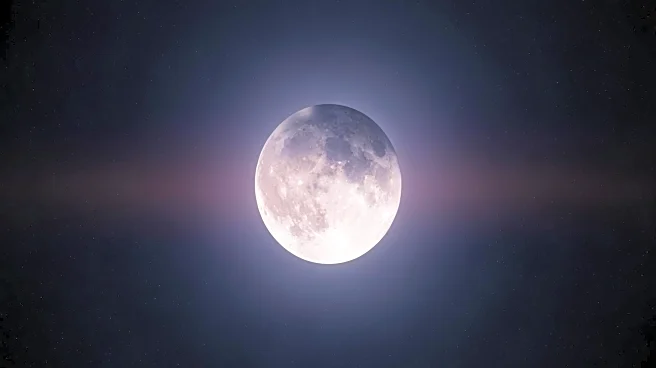
A total lunar eclipse, known as a 'blood moon,' will occur on March 3, 2026, visible from Australia, the Pacific, and the western half of North America. During the eclipse, the moon will pass into Earth's shadow, taking on a reddish hue. The event will be
best viewed from locations with clear skies, such as Grand Canyon National Park and Joshua Tree National Park in the U.S. Historical climate data suggests varying chances of cloud cover at these locations, with the Grand Canyon having a 63% chance of clouds. The eclipse offers a unique opportunity for stargazing and observing celestial phenomena.
Why It's Important?
The total lunar eclipse presents a significant opportunity for both amateur and professional astronomers to observe a rare celestial event. It also serves as an educational moment for the public to engage with astronomy and the natural world. The event's visibility across multiple continents underscores the global nature of astronomical phenomena and the shared human experience of observing the night sky. Additionally, the eclipse may boost tourism in areas known for dark skies, as enthusiasts travel to optimal viewing locations.