




What's Happening?
Lake Sakakawea is experiencing significantly low water levels, standing at 1,827.3 feet, about 12 feet below average. This situation is attributed to reduced snowfall in the Rocky Mountains, leading to decreased runoff into the Missouri River basin. The
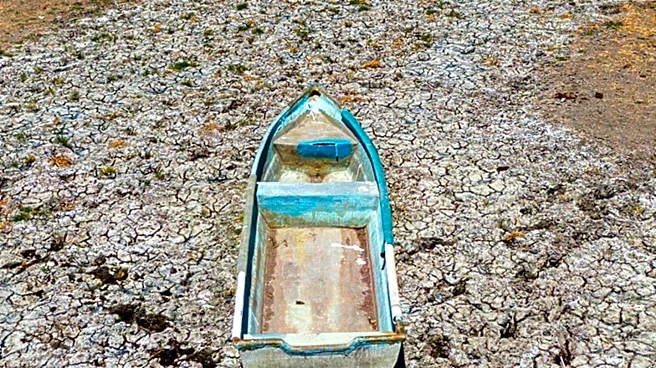
U.S. Army Corps of Engineers, responsible for managing the Garrison Dam and the lake, reports that while the lake is not expected to reach its historic low of 1,807.1 feet set in 2007, the current levels are causing access issues. Many boat ramps and marinas are closed, increasing traffic and wait times at the few that remain open. The North Dakota Game and Fish Department is preparing to utilize low-water ramps, which have been submerged since the lake's recovery from its previous low.
Why It's Important?
The low water levels on Lake Sakakawea have significant implications for local tourism and recreation. Resorts and parks are facing challenges in maintaining access for visitors, which could impact their business and the local economy. The situation also affects recreational activities such as boating and fishing, which are popular in the area. The need for maintenance and adaptation of infrastructure to accommodate changing water levels highlights the ongoing challenges posed by environmental changes. This situation underscores the importance of sustainable water management practices and the need for adaptive strategies to support local communities and industries.
What's Next?
Efforts to address the access issues on Lake Sakakawea will continue, with the North Dakota Game and Fish Department and the U.S. Army Corps of Engineers working to assess and maintain low-water ramps. The process involves financial and logistical challenges, as resources are limited. The situation may prompt discussions on long-term strategies for managing water resources and infrastructure in the face of environmental variability. Stakeholders, including local businesses, government agencies, and community members, will need to collaborate to find solutions that ensure continued access and support for the region's recreational and economic activities.