







What's Happening?
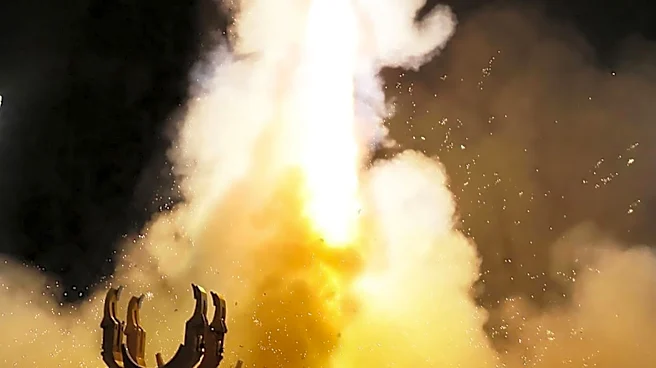
Japan is restructuring its security architecture around a new concept of 'denial capability,' aiming to deter attacks by making potential aggressors conclude that their operations cannot succeed. This strategy involves three key components: expanded development
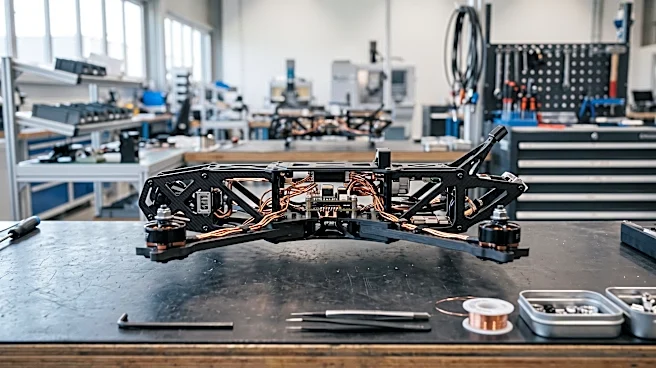
and deployment of long-range missiles and drones, a stronger domestic defense industrial base capable of sustained production, and wider cooperation with countries opposing unilateral changes to the status quo. On October 27, the government presented a Defence Industrial Base Strategy and announced a new state body to support private defense firms. The following day, Defense Minister Shinjiro Koizumi met with U.S. Defense Secretary Pete Hegseth in Cebu to strengthen defense cooperation along the first island chain, while Prime Minister Sanae Takaichi hosted German Chancellor Friedrich Merz in Tokyo, resulting in a joint statement welcoming Japan's arms-export review and promoting defense-industrial cooperation, particularly in uncrewed systems. These events signify a coordinated effort to enhance Japan's defense posture and industrial capacity.
Why It's Important?
Japan's shift to a 'denial capability' strategy marks a significant evolution in its defense policy, moving beyond its traditional 'exclusively defensive defense' while still adhering to its principles. This new approach, aligned with the U.S. National Defense Strategy, aims to create a common conceptual framework for investment decisions among allies, particularly along the first island chain. The establishment of a state body to support the defense industrial base is crucial for ensuring the mass production of munitions and continuous development of dual-use technology, addressing the historical challenge of sustaining a defense industry in peacetime. Strengthening alliances with the U.S. and Germany, through joint production and industrial cooperation, broadens Japan's network of partners and enhances its ability to withstand prolonged conflicts. This strategic realignment is vital for regional stability, particularly in the context of growing concerns over the East China Sea, South China Sea, and the Taiwan Strait, without explicitly naming China.
What's Next?
The expert panel is expected to report on the revised defense documents by early December, with cabinet adoption targeted for mid-to-late December. Key areas to watch include the stable funding plan and a new spending target, the legal form, staffing, and budget of the new state body for the defense industrial base, and concrete details on the missile assembly facility in Japan. Cooperation with the United States, the Philippines, and other partners will focus on translating statements into shared production and logistics. On the German track, an early meeting of foreign and defense ministers (2+2) is anticipated, along with decisions on a first uncrewed-systems project and joint exercises. Japan is also seeking a decision by early next year regarding Germany's potential participation in the Global Combat Air Programme (GCAP). These developments will determine whether Japan's 'denial capability' becomes a robust, funded strategy or remains a conceptual framework.
Beyond the Headlines
Japan's new defense strategy, while framed as 'denial capability,' carries deeper implications for its role in global security and its domestic political landscape. The emphasis on a strong industrial base and international cooperation reflects a recognition that modern defense requires not just advanced weaponry but also resilient supply chains and a broad coalition of partners. This approach could help counter accusations of 'new militarism' by framing its buildup as a response to threats and a contribution to collective security. However, the fiscal implications, particularly the debate over stable funding and potential tax increases for defense, will be a significant domestic challenge. The strategy also highlights the evolving nature of deterrence, moving from a focus on 'counterstrike capability' to a more comprehensive 'kill web' approach that integrates sensors, shooters, partners, and production capabilities. This shift could redefine Japan's defense identity and its engagement with the international community.