








What's Happening?
Okinawan tattoo artists are openly defying Japanese law by demonstrating scalp micropigmentation (SMP) at a convention center in Okinawa, risking legal repercussions. Remy Browman, founder of the Japan Tattoo Hygiene Association, asserts that the industry
prioritizes safety, teaching disease prevention methods, but claims the law has not adapted to modern practices. While decorative tattooing was legalized in 2020 by Japan's Supreme Court, ruling it does not require a medical license, SMP and permanent make-up remain in a legal gray area, leaving artists vulnerable. Hairstylist Shinmasu Michiko highlights Japan's unique stance, as permanent make-up is typically applied by beauty professionals globally. The Japanese health ministry recently warned that unlicensed practitioners could face criminal complaints and arrest, despite the established history of doctors' involvement in SMP.
Why It's Important?
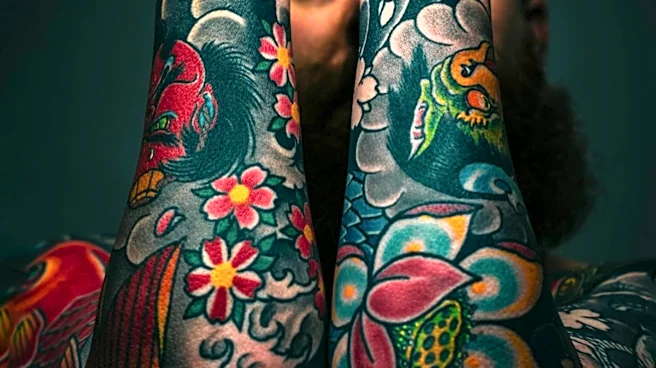
The ongoing challenge by Okinawan artists against Japan's tattoo regulations highlights a significant cultural and legal conflict. The deep-seated stigma against tattoos in Japan, often linked to criminals and outcasts, continues to influence public perception and policy, despite evolving attitudes. This situation impacts not only the livelihoods of tattoo and permanent make-up artists but also limits consumer access to services widely accepted in other parts of the world. The legal ambiguity surrounding SMP and permanent make-up creates uncertainty for practitioners and clients, potentially driving these services underground and making it harder to ensure safety and hygiene standards. The pushback from Okinawa, historically distinct from mainland Japan, underscores a broader tension between traditional norms and modern practices, reflecting a desire for greater autonomy and updated regulations that align with international standards.
What's Next?
The fight to legalize cosmetic tattoos in Japan is expected to continue, particularly from artists in Okinawa who are actively pushing back against current regulations. The health ministry's recent warnings indicate a potential increase in enforcement against unlicensed practitioners, which could lead to more arrests and criminal complaints. This may prompt further legal challenges and advocacy efforts from organizations like the Japan Tattoo Hygiene Association, aiming to clarify and update the laws. The ongoing public discourse and demonstrations by artists could gradually shift public opinion and pressure lawmakers to re-evaluate the legal framework for SMP and permanent make-up, potentially leading to new legislation or clearer guidelines that distinguish cosmetic procedures from traditional tattooing and address the safety concerns raised by practitioners.
Beyond the Headlines
Beyond the immediate legal and professional implications, this issue touches upon deeper cultural and ethical considerations within Japanese society. The historical association of tattoos with marginalized groups has created a persistent stigma that affects individuals with tattoos in various public and professional settings. The struggle of Okinawan artists can be seen as part of a broader movement to challenge traditional norms and embrace more contemporary global practices. This situation also raises questions about the role of government in regulating personal choices and artistic expression, particularly when those expressions are widely accepted elsewhere. The outcome of this challenge could set a precedent for how Japan balances cultural preservation with modern societal changes and individual freedoms, potentially influencing other areas where traditional views clash with evolving global standards.