
What's Happening?
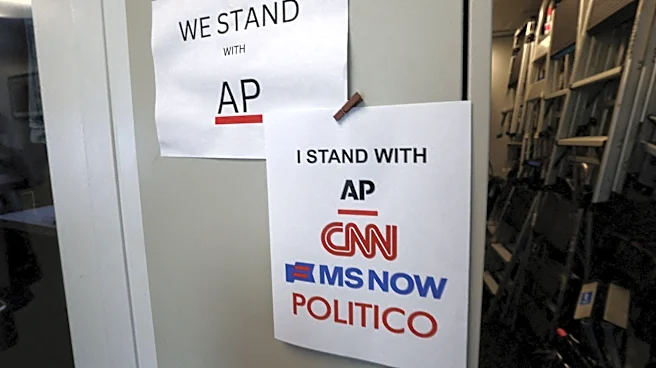
Several media freedom organizations and press freedom groups have issued a joint statement condemning the White House's decision to exclude CNN, MS NOW, and Politico journalists. They assert that this
action sends a 'very dangerous signal' that extends far beyond Washington. The organizations, representing journalists and publishers globally, are calling on world leaders attending the UN General Assembly in New York to emphasize to President Trump that a free and plural press is a fundamental pillar of democracy. They argue that journalists' access to government is not a privilege for them, but a right for the public to receive independent accounts of how power is exercised. The statement highlights that while neutral access rules for security or space are acceptable, access should never be used to reward favorable coverage or punish unfavorable reporting.
Why It's Important?
This action by the White House has significant implications for press freedom in the United States and globally. The exclusion of specific media outlets is perceived as an attempt to control narratives and punish critical reporting, which undermines the democratic principle of a free and independent press. For the U.S., this could erode public trust in government transparency and the media's role as a watchdog. Internationally, the organizations warn that such actions by a leading democracy like the U.S. could embolden autocratic regimes to further tighten their control over media, especially in countries where independent journalism is already under severe pressure. This could lead to a global decline in media freedom, impacting the public's right to information and the accountability of governments worldwide.
What's Next?
The media freedom organizations are urging world leaders to address President Trump directly regarding the importance of a free press. The excluded media outlets, CNN, MS NOW, and Politico, may pursue legal challenges, potentially citing First Amendment rights, as suggested by the source. The broader media landscape will likely continue to grapple with issues of access and perceived bias, with ongoing debates about the role of journalism in a democratic society. The response from other governments and international bodies to this incident will be crucial in determining whether this action becomes an isolated event or contributes to a wider trend of restricting media access and freedom globally. The organizations emphasize that press freedom is eroded gradually by choices made by those in power, making vigilance and advocacy essential.
Beyond the Headlines
The incident underscores a deeper tension between political power and the media's role in holding that power accountable. It raises fundamental questions about the definition of 'fake news' and the criteria for journalistic access to government institutions. The organizations' warning about the 'dangerous signal' highlights the interconnectedness of global media environments, where actions in one country can have ripple effects internationally. This situation also brings to the forefront the debate about the public's right to know versus a government's desire to control information. The long-term implications could include a more polarized media landscape, increased self-censorship among journalists in fear of reprisal, and a weakening of democratic norms if the principle of a free and plural press is not robustly defended.