



What's Happening?
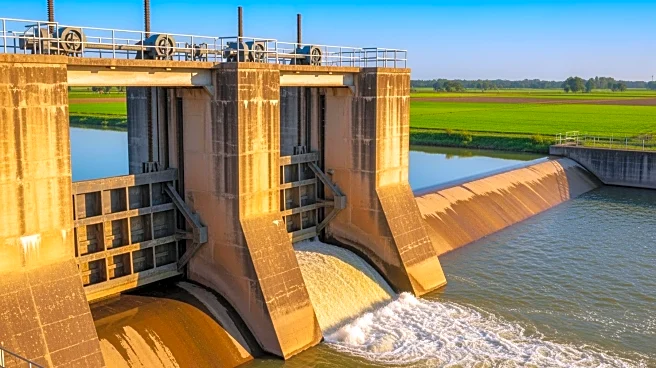
The Sukkur Barrage, a key component of Sindh's irrigation system, is facing significant operational challenges due to decades of deferred maintenance and infrastructural decay. Built in the early 20th century, the barrage is crucial for diverting water
into canals that support millions of hectares of farmland and approximately 600,000 farming households. However, issues such as sedimentation, structural fatigue, and outdated mechanical components have compromised its efficiency. Recent incidents have highlighted these vulnerabilities, with gate failures interrupting water supply to critical crops. The Sindh Barrages Improvement Project, funded by the World Bank, aims to rehabilitate the Sukkur and Guddu barrages, but progress has been uneven, with Sukkur's rehabilitation lagging behind.
Why It's Important?
The operational reliability of the Sukkur Barrage is vital for Sindh's food security and economic stability. Agriculture is a major contributor to the province's GDP and employment, and disruptions in irrigation can lead to significant economic losses. The barrage's modernization is also crucial for building resilience against climate change impacts, such as erratic rainfall and extreme flooding. Efficient water management is essential to mitigate these risks and ensure sustainable agricultural productivity. The rehabilitation project, therefore, is not just an infrastructure upgrade but a strategic necessity for the region's agrarian economy.
What's Next?
To ensure the successful rehabilitation of the Sukkur Barrage, it is essential to close the existing financing gap in the Sindh Barrages Improvement Project. This may require additional funding from the World Bank or alternative donors. Comprehensive modernization efforts, including the adoption of advanced hydraulic and structural technologies, are needed to enhance the barrage's operational capacity. Strengthening the technical and operational capacity of the Sindh Irrigation Department is also crucial for proactive maintenance and real-time water management. Intergovernmental coordination will be necessary to secure resources and integrate barrage rehabilitation into broader water resource planning.