






What's Happening?
A Russian drone attack in the southern Ukrainian city of Kherson resulted in the deaths of two individuals and injuries to seven others. This incident is part of a broader pattern of strikes targeting civilian areas, a hallmark of Moscow's ongoing military
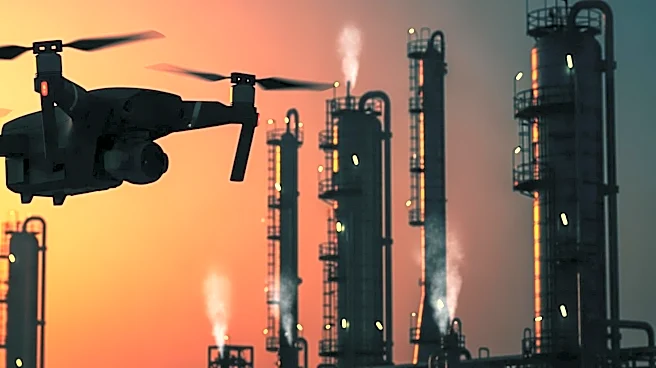
strategy in Ukraine. The attack on the minibus in Kherson underscores the persistent threat faced by Ukrainian civilians amidst the conflict. Additionally, Russia has claimed control over the village of Myropillia in Ukraine's northeastern Sumy region, although these battlefield claims have not been independently verified. Meanwhile, Ukrainian forces have intensified their strikes on Russian oil facilities, particularly targeting the Black Sea port of Tuapse, in an effort to disrupt Moscow's oil exports, a significant source of funding for its military operations.
Why It's Important?
The continued use of drones in the conflict between Russia and Ukraine highlights the evolving nature of modern warfare, where technology plays a crucial role in military strategy. The attacks on civilian areas in Ukraine, such as the recent strike in Kherson, raise significant humanitarian concerns and underscore the ongoing challenges in achieving a peaceful resolution. The targeting of Russian oil facilities by Ukrainian forces aims to weaken Russia's economic capabilities, potentially impacting global oil markets. However, the economic repercussions remain uncertain, as rising oil prices and changes in international sanctions have bolstered Russia's financial resources. The conflict's persistence, coupled with geopolitical distractions such as the Iran war, complicates diplomatic efforts and prolongs the suffering of affected populations.
What's Next?
The situation in Ukraine remains volatile, with potential for further escalation as both sides continue to engage in military operations. The international community, particularly NATO and the United States, may face increased pressure to address the conflict more decisively, balancing their focus between Ukraine and other global issues. The ongoing use of Belarus as a staging ground for Russian operations could also lead to heightened tensions in the region. Diplomatic efforts, including U.S.-brokered peace talks, are likely to continue, but achieving a ceasefire or lasting peace agreement remains challenging given the current geopolitical dynamics.
Beyond the Headlines
The conflict in Ukraine serves as a stark reminder of the complexities of modern warfare, where technological advancements such as drones play a pivotal role. The ethical implications of targeting civilian areas and critical infrastructure raise questions about the rules of engagement and the protection of non-combatants in conflict zones. Additionally, the economic strategies employed by both sides, including targeting oil exports, highlight the interconnectedness of global markets and the potential for broader economic repercussions. The situation also underscores the importance of international cooperation and the need for effective conflict resolution mechanisms to address such protracted crises.