





What's Happening?
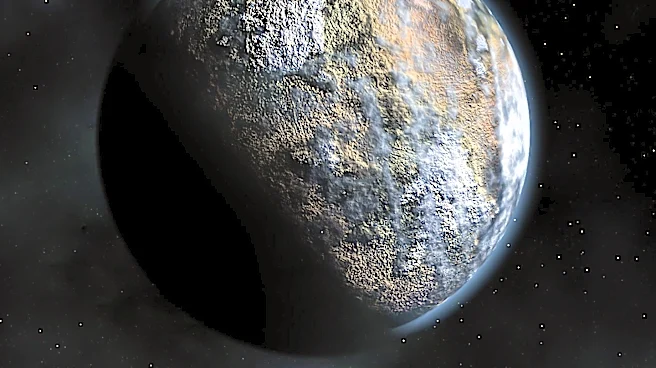
Scientists have discovered a planet named GJ 3378b, located 25 light-years from Earth, which may be a promising candidate in the search for extraterrestrial life. The planet orbits within the habitable 'Goldilocks' zone of its star, where conditions might
allow for liquid water. GJ 3378b is about twice the size of Earth and receives approximately 90% of the radiation that Earth gets from the sun. The discovery was made using advanced instruments like the Habitable-zone Planet Finder and the NEID spectrometer. Researchers are now focused on determining whether the planet has an atmosphere, which is crucial for supporting life.
Why It's Important?
The discovery of GJ 3378b is significant as it provides a nearby target for studying the potential for life beyond our solar system. Understanding whether the planet has an atmosphere is critical, as it can regulate temperatures and protect against harmful radiation, increasing the likelihood of liquid water. This research not only advances the search for extraterrestrial life but also enhances our understanding of planetary atmospheres and stability, which can inform studies of Earth's own life-supporting conditions.
What's Next?
Future observations using both space- and ground-based telescopes will aim to confirm the presence of an atmosphere on GJ 3378b. If an atmosphere is detected, the planet could become a key target for searching for biosignatures and other indicators of habitability. The ongoing research will contribute to the development of new methods for studying planetary atmospheres and may lead to further discoveries of potentially habitable worlds.
Beyond the Headlines
The discovery of GJ 3378b underscores the importance of continued investment in space exploration and the development of advanced observational technologies. As scientists push the boundaries of what is known about distant worlds, ethical considerations regarding the exploration and potential exploitation of extraterrestrial environments will become increasingly relevant. The findings also highlight the interconnectedness of planetary science and the broader quest to understand the universe and our place within it.