


What's Happening?
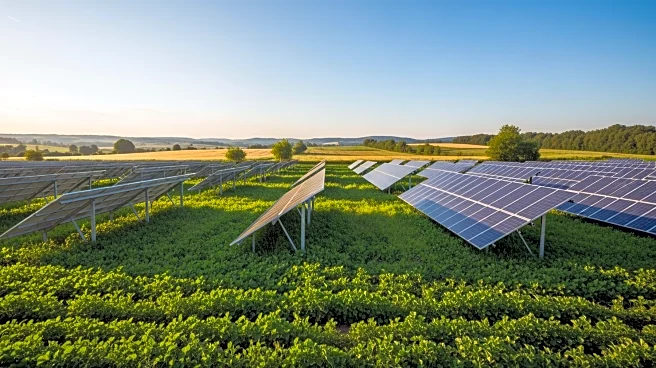
Rebekah Pierce, a farmer and author, is advocating for 'agri-energy,' a system that integrates renewable energy with agriculture. This approach allows for the coexistence of farming and solar power generation on the same land, which can enhance rural
economies and reduce pollution. Pierce's work is particularly relevant as American farmers face challenges such as rising land prices and the consolidation of agriculture. By implementing agri-energy systems, farmers can maintain financial viability while contributing to the transition away from fossil fuels. Pierce's own farm in New York has successfully adopted solar grazing, demonstrating the practical benefits of this approach.
Why It's Important?
Agri-energy presents a dual solution to the challenges of sustainable agriculture and renewable energy development. For U.S. farmers, it offers a way to remain profitable amidst economic pressures, while also supporting environmental goals. This model can help stabilize food prices, protect farmland from permanent development, and make clean energy more accessible. By generating income per acre, agri-energy can also attract younger farmers, preserving local food systems. The potential for reversible energy installations further positions agri-energy as a tool for land preservation, offering a sustainable alternative to traditional development.
What's Next?
As agri-energy gains traction, it could lead to broader adoption of dual-use land practices across the U.S. This may involve increased collaboration between farmers and renewable energy developers, as well as policy support to facilitate these projects. The success of Pierce's initiatives could inspire other regions to explore similar models, potentially transforming the agricultural landscape. Stakeholders, including government agencies and environmental groups, may play a role in promoting agri-energy as a viable solution for sustainable development.