





What's Happening?
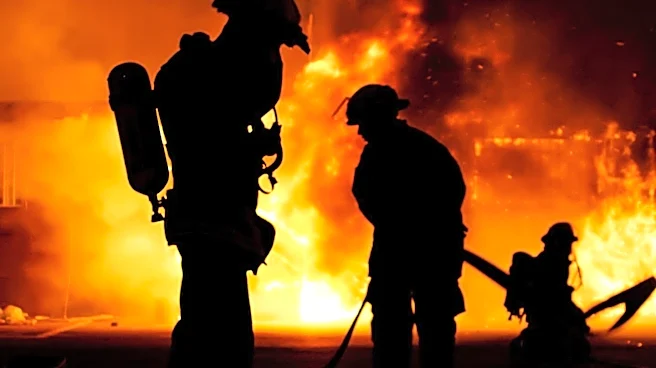
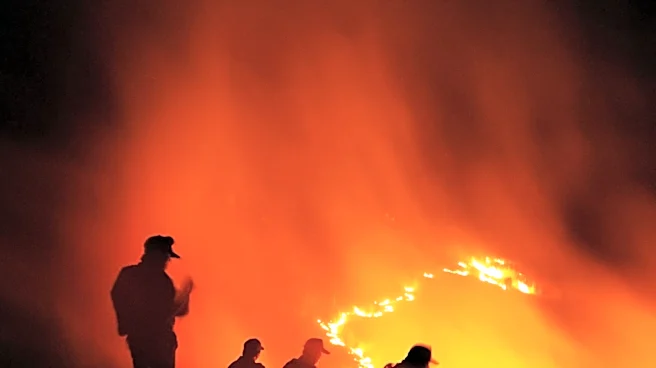
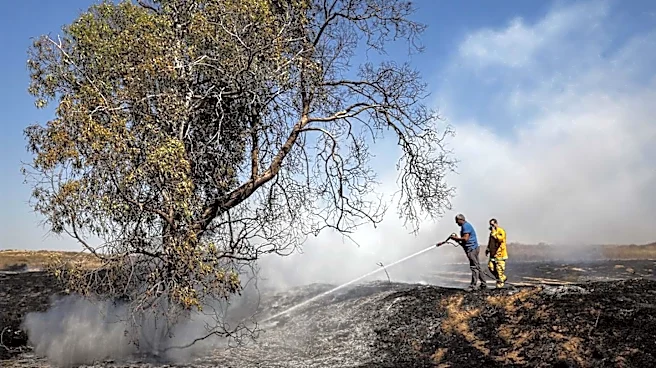
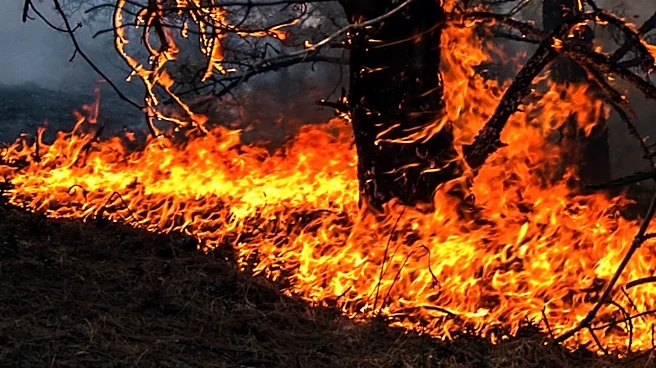
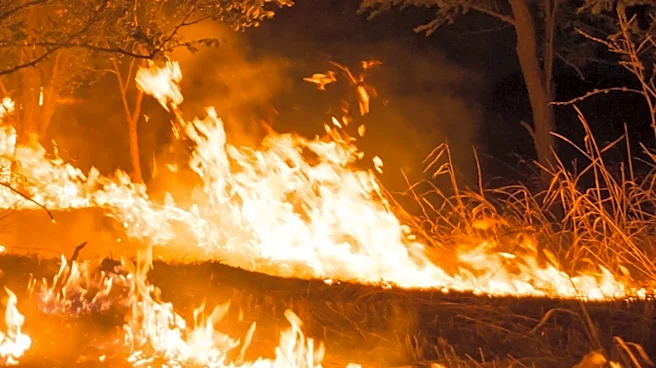
A new wildfire, named the Juno Fire, has burned 188 acres in Antelope Valley, California, near Lancaster Road and Munz Ranch Road. This fire emerged as firefighters were already battling the larger Summit Fire, which has consumed nearly 2,700 acres. The
Juno Fire prompted initial evacuation warnings, which were later lifted. Meanwhile, the Summit Fire remains only 8% contained, with evacuation orders still in place for the Llano area. The fires are exacerbated by a heat wave and looming monsoon conditions, posing challenges for containment efforts.
Why It's Important?
The emergence of the Juno Fire alongside the ongoing Summit Fire underscores the increasing frequency and intensity of wildfires in California, driven by extreme weather conditions. These fires threaten local communities, infrastructure, and natural resources, highlighting the urgent need for effective fire management and climate adaptation strategies. The situation also stresses the importance of federal and state support in disaster response and recovery efforts, as communities face potential displacement and economic losses.
What's Next?
Firefighting efforts will continue as authorities aim to contain both the Juno and Summit fires. The focus will be on preventing further spread, especially with the anticipated monsoon conditions that could complicate firefighting operations. Local residents and authorities will need to remain vigilant, with potential for further evacuation orders if conditions worsen. Long-term, there may be discussions on improving fire prevention measures and infrastructure resilience in fire-prone areas.