


What's Happening?
IBM has announced the activation of its Quantum System Two in Chicago, powered by the Nighthawk processor, at Hyde Park Labs. This deployment marks IBM's first quantum computer installation in Illinois. The system is described by IBM as its most advanced
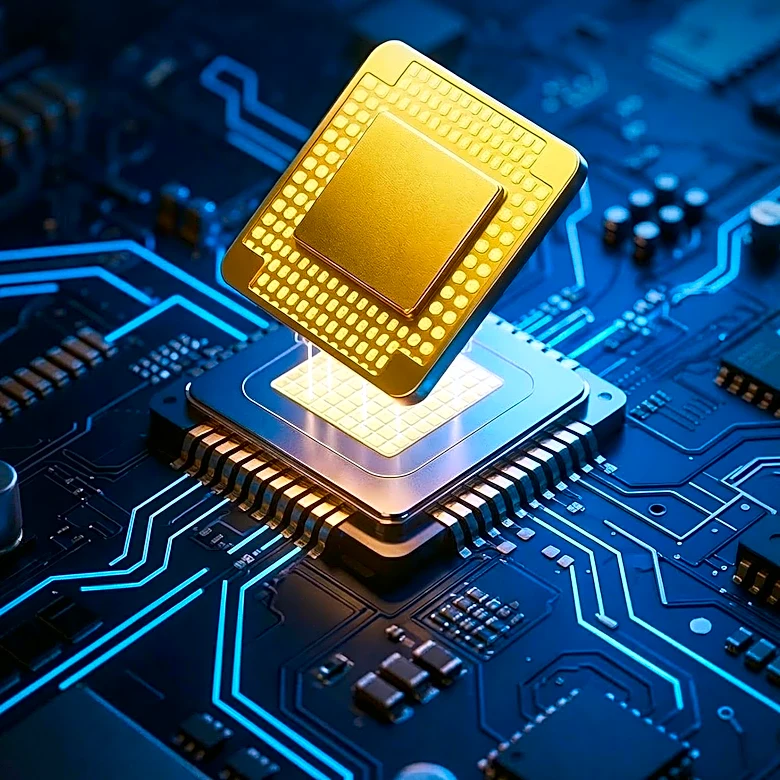
offering to date. This launch deviates from the original plan announced in December 2024, which projected a System Two equipped with the Heron processor to be deployed in Chicago within the following year. The actual launch occurred in November 2026, with the processor upgraded to Nighthawk r2. While the Nighthawk r2 has 120 programmable qubits, which is fewer than Heron's 156, it features an increased number of couplers (218 compared to Heron's 176) and significantly faster circuit execution speeds, exceeding 100,000 circuits per second, a substantial increase from Heron's 4,000 per second. The system is currently housed at Hyde Park Labs and is slated for eventual relocation to the Illinois Quantum and Microelectronics Park (IQMP) once construction is complete, where it will serve as the core facility for the National Quantum Algorithm Center (NQAC). The State of Illinois has contributed a $25 million grant to the University of Illinois Board of Trustees for the acquisition and installation of the quantum computer.
Why It's Important?
The deployment of IBM's Quantum System Two with the Nighthawk processor in Chicago is a significant step in advancing quantum computing capabilities within the United States. This installation positions Illinois as a key hub for quantum technology research and development, fostering collaboration between IBM, universities, and industries through the National Quantum Algorithm Center (NQAC). The shift to the Nighthawk processor, with its enhanced connectivity and circuit execution speed, indicates a strategic focus on improving the efficiency and complexity of quantum computations, even if it means a reduction in raw qubit count. This development could accelerate breakthroughs in various fields, including materials science, drug discovery, and financial modeling, by providing researchers with access to more powerful quantum resources. The state's substantial investment underscores the growing recognition of quantum computing's potential to drive economic growth and technological leadership. However, the performance claims are currently IBM's own assessments, and independent verification will be crucial for establishing the system's true impact and utility in solving real-world problems.
What's Next?
The IBM Quantum System Two in Chicago is expected to eventually relocate from Hyde Park Labs to the Illinois Quantum and Microelectronics Park (IQMP), which is currently under construction. This move will solidify the IQMP as a central hub for quantum algorithm research and development. Future developments will likely involve third-party verification of the Nighthawk r2's performance and its effectiveness in solving complex computational problems. Researchers and industries will begin utilizing the system, generating real-world data and use cases that will further define its capabilities and limitations. IBM's long-term roadmap includes the development of the fault-tolerant quantum computer 'Starling' by 2029, aiming for 200 logical qubits and the ability to run quantum circuits of 100 million gates. The performance of the Nighthawk r2 will be a critical stepping stone towards achieving these future goals, and its operational results will inform subsequent quantum hardware and software advancements. The ongoing collaboration between IBM, the State of Illinois, and academic institutions will also shape the future direction of quantum research and application in the region.
Beyond the Headlines
The deployment of advanced quantum computing systems like IBM's Quantum System Two in Chicago highlights a broader national and global race for quantum supremacy. This initiative is not just about technological advancement but also about establishing regional leadership in a nascent but potentially transformative industry. The substantial state funding reflects a strategic investment in future economic competitiveness and national security, as quantum computing has implications for cryptography, defense, and critical infrastructure. The ongoing debate and scrutiny regarding 'quantum advantage'—the point at which quantum computers definitively outperform classical supercomputers for practical problems—underscore the scientific and commercial challenges that remain. The shift in processor from Heron to Nighthawk, prioritizing connectivity and speed over raw qubit count, suggests an evolving understanding of optimal quantum architecture. This evolution indicates that the path to practical quantum computing is iterative and complex, requiring continuous innovation in hardware design, error correction, and algorithm development. The ethical implications of such powerful computing capabilities, particularly in areas like AI and cybersecurity, will also become increasingly prominent as the technology matures.