



What's Happening?
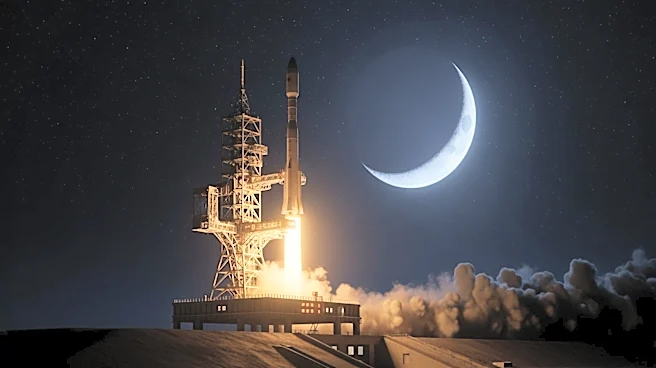
NASA's Artemis II mission has successfully launched, marking the first crewed mission to the moon in over 50 years. The mission, which includes astronauts Reid Wiseman, Victor Glover, Christina Koch, and Canadian Jeremy Hansen, aims to test the Orion
spacecraft's systems on a 230,000-mile journey around the moon. This mission is a critical step in NASA's plans for future deep space exploration, including establishing a permanent lunar base.
Why It's Important?
The Artemis II mission is pivotal for the future of human space exploration. It serves as a test for the technologies and systems that will be used in subsequent missions, including those aimed at establishing a sustainable human presence on the moon. The success of this mission could pave the way for more frequent lunar missions and potentially lead to the development of a lunar economy. It also represents a significant milestone in international cooperation in space, with contributions from multiple countries.
What's Next?
Following the Artemis II mission, NASA plans to increase the frequency of lunar missions, with the ultimate goal of establishing a permanent base on the moon. The data and experience gained from this mission will inform future missions, including Artemis III, which aims to land astronauts on the lunar surface. The success of Artemis II could also encourage further international collaboration in space exploration, potentially leading to joint missions to Mars and beyond.