
What's Happening?
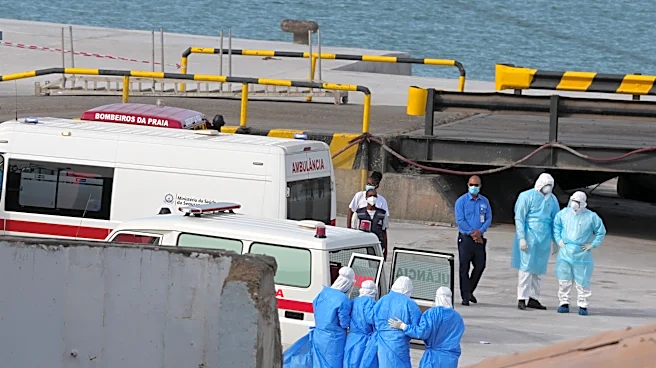
Kalshi, a prediction markets platform, has assessed a 21% chance of a hantavirus outbreak becoming a significant concern this year. This assessment follows the World Health Organization's (WHO) identification
of the virus as an outbreak on May 4, 2026, after several passengers on a Dutch-flagged cruise ship fell ill. The hantavirus, a fatal respiratory disease, is transmitted through contact with infected rodents' urine, feces, or saliva. Despite the outbreak, WHO Director-General Tedros Adhanom Ghebreyesus has stated that the public health risk remains low. The situation is being closely monitored, with six U.S. states—Arizona, California, Georgia, Texas, Virginia, and New Jersey—tracking passengers from the affected cruise ship. So far, no symptoms have been reported among these individuals.
Why It's Important?
The potential for a hantavirus outbreak poses significant public health concerns, particularly given the virus's high fatality rate and mode of transmission. The WHO's involvement underscores the seriousness of the situation, although their assessment of a low public health risk provides some reassurance. The monitoring of passengers in multiple U.S. states highlights the interconnected nature of global health issues and the importance of international cooperation in disease prevention and control. The prediction market's activity, with trading volumes reaching $174,000, reflects public interest and concern over the potential spread of the virus. This situation serves as a reminder of the need for robust public health infrastructure and preparedness to manage emerging infectious diseases.
What's Next?
The WHO will continue to monitor the situation and provide updates as necessary. Health officials in the U.S. and other affected regions will maintain surveillance of individuals who may have been exposed to the virus. Should the situation escalate, further public health measures may be implemented to prevent the spread of the virus. The prediction market will likely continue to track developments, providing insights into public sentiment and expectations regarding the outbreak. Ongoing communication from health authorities will be crucial in managing public perception and ensuring appropriate responses to any changes in the outbreak's status.