








What's Happening?
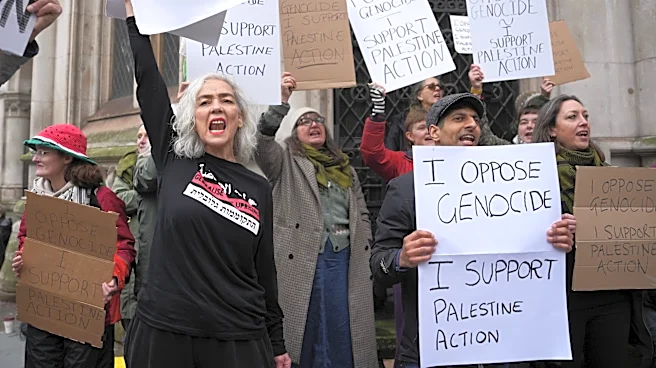
The court of appeal has upheld the government's ban on Palestine Action, a group known for its protests against military equipment manufacturers. The ruling has sparked debate over the government's broad definition of terrorism and its application. The ban was
initially imposed by former home secretary Yvette Cooper after members of Palestine Action spray-painted warplanes, an act traditionally seen as civil disobedience. Critics argue that the government's approach disproportionately targets those challenging Israel's actions in Gaza, while similar actions in Belfast have not resulted in terrorism charges. The judgment has raised concerns about the fairness and consistency of applying terrorism laws, with over 3,000 arrests related to Palestine Action protests, yet no charges for those inciting riots in Belfast.
Why It's Important?
The ruling highlights ongoing tensions in defining and applying terrorism laws, particularly concerning civil disobedience and political protests. The decision could have significant implications for protest groups and civil liberties, as it suggests a potential shift towards criminalizing dissent. This could affect public policy and the legal landscape, potentially discouraging activism and impacting groups advocating for human rights and political change. The disparity in treatment between different types of protests raises questions about justice and equality under the law, potentially influencing public perception and trust in governmental and judicial institutions.
What's Next?
The ruling may lead to increased scrutiny and legal challenges from human rights organizations and civil liberties advocates. There could be calls for legislative review or reform to clarify the definition of terrorism and ensure equitable application of the law. Activist groups might adjust their strategies, potentially seeking alternative methods of protest or legal avenues to challenge the ban. The government may face pressure to address perceived biases in its approach to terrorism and protest, possibly influencing future policy decisions and public discourse.
Beyond the Headlines
The case underscores broader issues of political and ideological bias in legal definitions and enforcement. It raises ethical questions about the balance between national security and civil liberties, and the role of government in regulating dissent. The ruling could contribute to a chilling effect on activism, impacting cultural and social movements advocating for change. Long-term, this may influence the landscape of political engagement and the nature of protest in the U.S., as similar legal principles and challenges are often mirrored across jurisdictions.