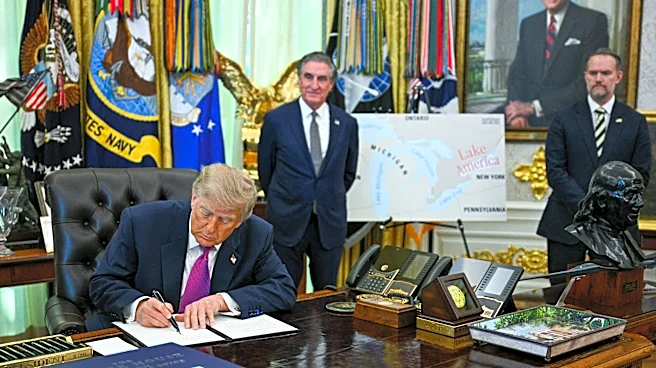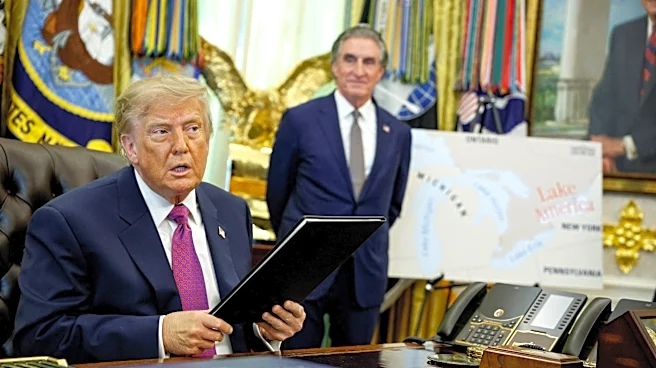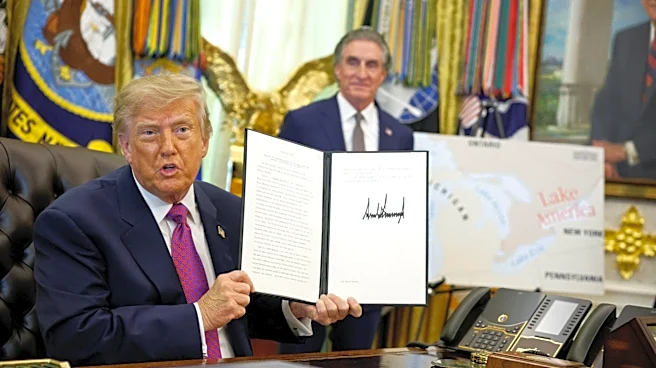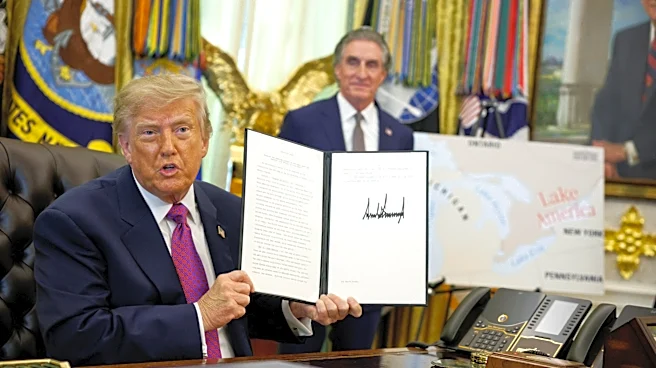



What's Happening?
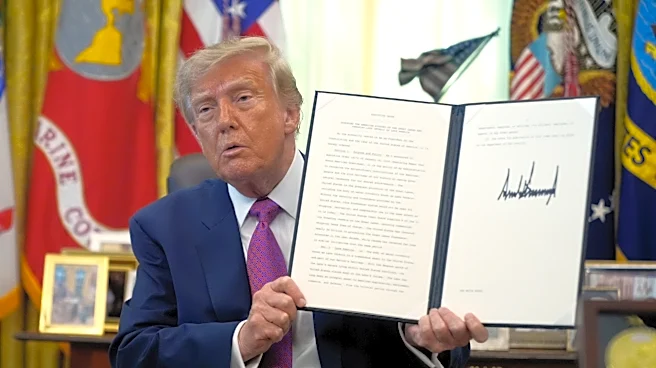
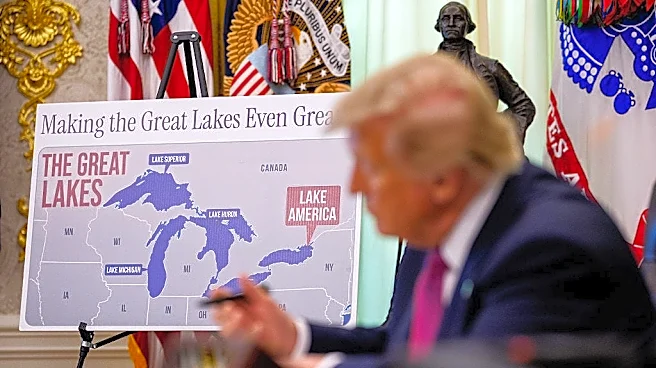
Wisconsin Governor Tony Evers publicly ridiculed President Trump's executive order to rename Lake Ontario to 'Lake America.' In a video posted on X, Governor Evers was shown at a McDonald's restaurant, where he signed a fast-food napkin declaring Lake Michigan
would now be called 'Lake Wisconsin.' This act was a direct jab at President Trump's decision, with Evers stating, 'See, I can sign napkins that say things, too.' The renaming of Lake Ontario by President Trump has drawn widespread criticism and mockery. Indigenous leaders have condemned the move, highlighting that the name 'Ontario' originates from the Wendat word 'Ontari:io,' meaning 'the lake is beautiful, the lake is big,' and predates the founding of both Canada and the United States. The city council in Rochester, NY, the largest American city on Lake Ontario, also unanimously passed a proclamation condemning President Trump's action and affirming their continued use of the Lake Ontario name. MapQuest, an American mapping company, also stated it would not change the name of Lake Ontario.
Why It's Important?
This event underscores the ongoing political tensions and cultural clashes surrounding presidential actions, particularly those perceived as unilateral or disrespectful to historical and Indigenous heritage. Governor Evers's satirical response highlights a broader sentiment of resistance and mockery from state-level officials and the public towards President Trump's more controversial decisions. The condemnation from Indigenous leaders and the Rochester City Council emphasizes the cultural and historical significance of geographical names, particularly those with Indigenous origins. Renaming such landmarks without consultation is seen as an attempt to erase history and identity, sparking outrage and reinforcing divisions. The refusal of a major mapping company like MapQuest to adopt the new name further illustrates the lack of widespread acceptance and the potential for such executive orders to be largely symbolic rather than practically implemented. This incident also serves as a distraction from other pressing issues, as noted by the Rochester City Council, which described President Trump's move as a 'desperate and flaccid stunt' diverting attention from economic concerns and foreign policy.
What's Next?
The immediate future will likely see continued public and political debate surrounding President Trump's renaming of Lake Ontario. Indigenous leaders, such as Wendat Nation Grand Chief Pierre Picard, are scheduled to meet with U.S. Ambassador to Canada Pete Hoekstra to express their concerns and advocate for the preservation of the original name. It is anticipated that Canadian officials, including Prime Minister Mark Carney, will continue to reject the name change, maintaining that the lake will remain known as Lake Ontario. Mapping companies and other organizations are expected to follow suit, largely ignoring the executive order. The incident may also fuel further political satire and criticism from opposing political figures, potentially becoming a talking point in upcoming elections. The broader implications could include increased scrutiny of executive powers regarding geographical naming conventions and a renewed focus on the importance of Indigenous place names and cultural heritage in public discourse.
Beyond the Headlines
The controversy surrounding the renaming of Lake Ontario delves into deeper implications concerning national identity, cultural sovereignty, and the power dynamics between federal and local/Indigenous authorities. President Trump's action, following a similar move in 2025 to rename the Gulf of Mexico, suggests a pattern of asserting nationalistic narratives over established historical and cultural contexts. This approach can be seen as an attempt to redefine national symbols and narratives, potentially alienating significant portions of the population, including Indigenous communities whose heritage is intrinsically linked to these geographical features. The strong reactions from Indigenous leaders, who view the renaming as an 'eradication of their history,' highlight the ongoing struggle for recognition and respect for Indigenous rights and cultural heritage in the U.S. and Canada. Furthermore, the incident raises questions about the limits of presidential authority and the role of public opinion and local governance in shaping national policy, particularly when such policies touch upon deeply rooted cultural and historical sensitivities.