

What's Happening?
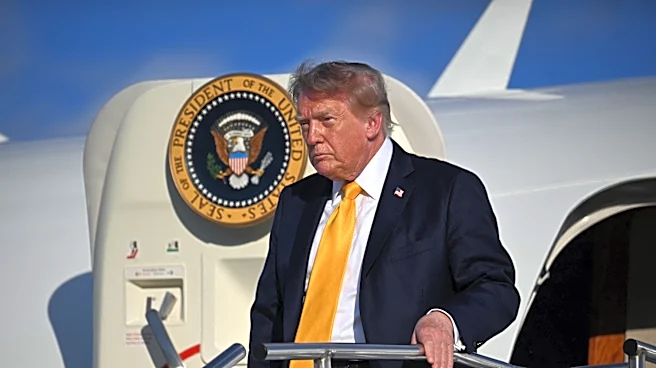
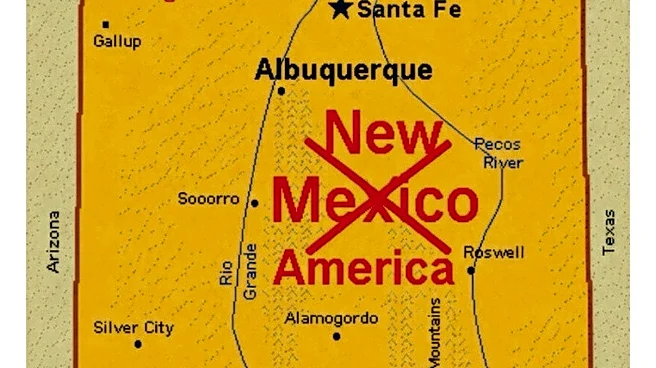
New Mexico political leaders from both major parties have strongly rejected President Trump's recent social media posts suggesting the state be renamed 'New America.' On Sunday, President Trump shared an image on Truth Social depicting a map of New Mexico with
a red 'X' over 'Mexico' and 'America' written underneath. He later posted again, stating, 'People suggested changing the name of New Mexico, one of the greatest vote cheating states of all time, to NEW AMERICA. So much more prestigious and beautiful for the people of that potentially great state. I love it!!!' This suggestion drew immediate and widespread condemnation. Democratic Governor Michelle Lujan Grisham asserted that 'New Mexico's name isn't up for debate.' Republican gubernatorial nominee Gregg Hull emphasized the state's deep historical and cultural identity, stating, 'New Mexico does not need a new name.' Democratic gubernatorial nominee Deb Haaland also dismissed the idea, saying, 'New Mexico is not for renaming. Not up for sale.' Members of New Mexico's congressional delegation, including U.S. Senator Martin Heinrich and U.S. Representatives Melanie Stansbury and Gabe Vasquez, echoed these sentiments, highlighting the state's rich history, culture, and identity.
Why It's Important?
This incident underscores the significant cultural and historical identity associated with U.S. state names and the strong reactions that can arise from suggestions of renaming. New Mexico's name, 'Nuevo México,' has roots dating back to Spanish explorers in the late 1500s, predating both its statehood and the formation of the United States. The bipartisan opposition to President Trump's suggestion highlights a rare point of unity among political figures in the state, emphasizing that the state's name is not merely a label but a reflection of its heritage and the identity of its residents. For New Mexicans, the name embodies generations of history, diverse cultures, and family legacies. The swift and unified rejection from leaders across the political spectrum indicates that such a proposal is seen as an affront to the state's foundational identity, rather than a mere administrative change. This event also brings to light the limitations of presidential authority, as a U.S. president cannot unilaterally rename a state, unlike certain federal geographic features.
What's Next?
While President Trump's posts did not constitute a formal proposal, the strong backlash from New Mexico's political establishment suggests that any future attempts to formally pursue a name change would face insurmountable opposition. The immediate focus for New Mexico's leaders, as articulated by Republican gubernatorial nominee Gregg Hull, remains on addressing issues such as job creation, economic stability, rising costs, and energy independence. The Democratic Party of New Mexico characterized President Trump's suggestion as a 'distraction from the fact that Trump and Republicans are making life more expensive,' indicating that they will likely continue to frame such discussions within the context of broader economic concerns. This event may also serve to reinforce New Mexico's unique cultural and historical narrative on a national stage, as leaders continue to defend its established identity against external suggestions.
Beyond the Headlines
This episode delves into deeper implications concerning national identity, historical preservation, and the role of social media in political discourse. The suggestion to rename a state touches upon the sensitive issue of cultural erasure and the respect for indigenous and historical naming conventions. New Mexico's name is a direct link to its Spanish colonial past and its unique blend of Native American, Hispanic, and Anglo cultures. The bipartisan rejection signals a collective understanding that some aspects of identity are non-negotiable and transcend partisan politics. Furthermore, the incident highlights the potential for social media posts from high-profile figures to generate significant political and public reactions, even when not presented as formal policy. It also raises questions about the distinction between informal suggestions and official policy proposals, and how the public and political figures interpret such communications in the digital age. The event underscores the enduring power of place names as symbols of heritage and collective memory.