






What's Happening?
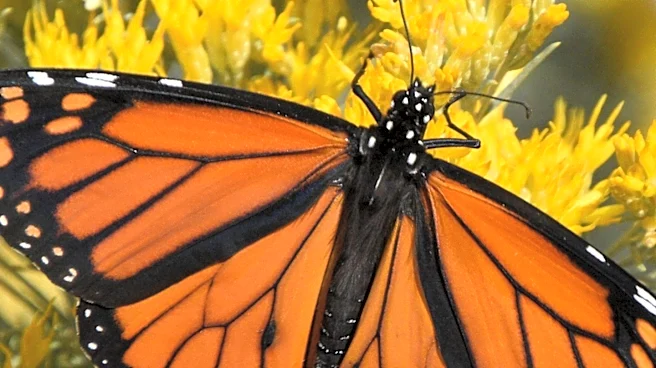
Monarch butterflies, North America's iconic insect, are experiencing a resurgence in population after years of decline. Vann Newkirk, a senior editor at The Atlantic, recently visited Mexico to observe the monarchs' overwintering grounds. Despite previous
concerns about their dwindling numbers, the monarch population has been increasing over the past two years. However, challenges remain, including climate change and habitat destruction. Newkirk highlights the role of illegal avocado farming in Mexico, which threatens the forests where monarchs migrate for the winter.
Why It's Important?
The recovery of the monarch butterfly population is a positive sign for biodiversity and environmental conservation efforts. Monarchs serve as an indicator species, reflecting the health of ecosystems across North America. Their resurgence suggests that conservation initiatives, such as planting milkweed and protecting overwintering habitats, are having a positive impact. However, the ongoing threats of climate change and habitat destruction underscore the need for continued efforts to preserve these vital ecosystems. The monarchs' journey also highlights the interconnectedness of environmental issues across borders.
Beyond the Headlines
The monarch butterfly's story illustrates the complex relationship between agriculture and conservation. The demand for avocados in the U.S. has led to deforestation in Mexico, impacting the monarchs' winter habitat. This situation raises ethical questions about sustainable agriculture and the responsibility of consumers to support environmentally friendly practices. The monarchs' plight also serves as a reminder of the broader challenges posed by climate change, which affects species and ecosystems worldwide. Efforts to protect the monarchs can inspire broader environmental action and awareness.