



What's Happening?
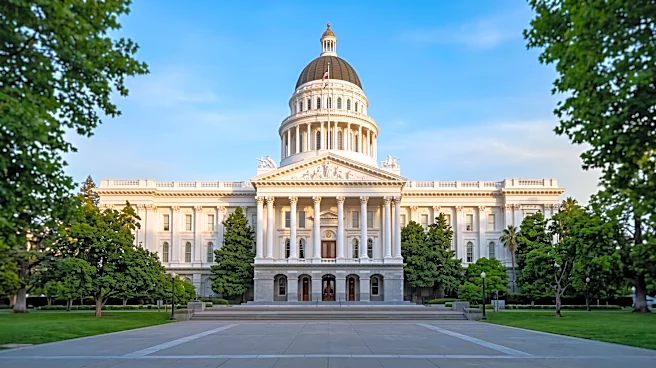
California is exploring legislative measures to integrate voter education into school curricula, aiming to address a significant decline in youth voter registration and participation. Currently, Generation Z accounts for approximately one in five eligible
voters in California, yet their registration and turnout rates are considerably lower than older demographics. For instance, in the 2024 general election, only 42.5% of eligible Californians aged 18 to 24 cast a ballot, compared to 62% of eligible voters overall. Furthermore, 57% of 18-year-olds in California are unregistered. A survey by Power California revealed that 40% of young respondents believe their votes don't effect change, and another 40% expressed distrust in politicians. This initiative seeks to ensure that students are educated on how to register and the importance of voting before graduating high school, thereby fostering greater civic engagement.
Why It's Important?
The proposed legislation in California is a direct response to a national trend of declining trust in democratic processes among young Americans. Surveys indicate that one in four young Americans do not consider free elections important for choosing leaders, and fewer than 30% of those under 40 believe it is necessary to live in a democracy. This widespread disengagement, if left unaddressed, could lead to democratic backsliding, as authoritarian tendencies often capitalize on voter apathy. By embedding civic education within the school system, California aims to rebuild trust and demonstrate national leadership in safeguarding democratic participation. The initiative recognizes that young people place more confidence in parents, friends, and local organizations than in political parties, suggesting that education within familiar institutions like schools could be an effective strategy to re-engage them.
What's Next?
California lawmakers are expected to reintroduce and push for legislation that would mandate voter education and pre-registration mechanics for 11th graders. Previous attempts to pass such bills have failed, but the current focus on youth disengagement may provide renewed momentum. If enacted, these measures would require schools to educate students on the process of voter registration and the significance of civic participation. The goal is to ensure that every student graduates with the knowledge and understanding necessary to engage in the democratic process. Additionally, there will likely be continued efforts to implement broader civic education reforms to provide a deeper understanding of democracy and the skills required for participation.
Beyond the Headlines
The initiative in California highlights a deeper societal challenge: the erosion of faith in democratic institutions among younger generations. This trend is not isolated to California but reflects a national condition where economic hardships, such as the cost of living outpacing wages, contribute to a sense of powerlessness and disengagement. The focus on school-based civic education suggests a recognition that traditional political outreach methods may be insufficient. By leveraging the classroom environment, where young people interact with trusted adults and peers, the state aims to foster a foundational understanding of civic responsibility. This approach could serve as a model for other states grappling with similar issues, potentially leading to a nationwide re-evaluation of how civic literacy is cultivated and sustained.