

What's Happening?
President Donald Trump has publicly criticized NATO allies for their lack of support in the ongoing US-Israel conflict with Iran. The conflict has led to the effective closure of the Strait of Hormuz, a critical passage for global oil shipments. President Trump expressed
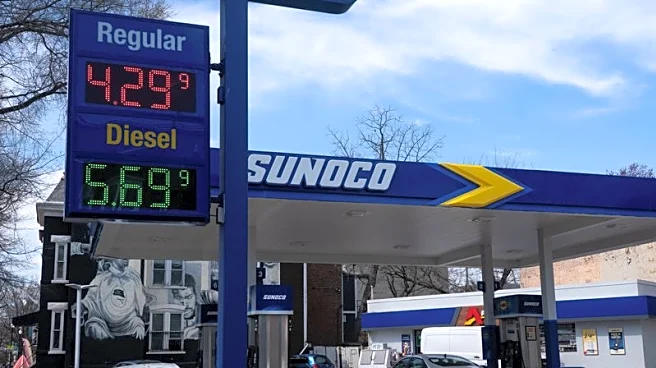
his frustration on his Truth Social platform, labeling NATO countries as 'cowards' for not participating in the military efforts to reopen the strait, which he claims is the primary reason for high oil prices. The conflict, which began with US-Israeli strikes on February 28, has significantly impacted global markets and resulted in numerous casualties and displacements. In response to the situation, NATO has announced adjustments to its mission in Iraq, relocating personnel to Europe. French President Emmanuel Macron, following a European Union summit, emphasized the importance of defending international law and promoting de-escalation, noting a lack of willingness among European leaders to engage in the conflict.
Why It's Important?
The criticism from President Trump highlights tensions within NATO and underscores the geopolitical complexities of the US-Israel conflict with Iran. The closure of the Strait of Hormuz has significant implications for global energy markets, contributing to rising oil prices and economic uncertainty. NATO's reluctance to engage militarily reflects broader concerns about escalating the conflict and the potential for further destabilization in the region. The situation also poses challenges for European economies, as high energy costs and inflationary pressures threaten economic stability. The lack of consensus among European leaders on how to address the energy crisis further complicates efforts to mitigate the conflict's impact. This development underscores the delicate balance of international alliances and the strategic considerations involved in addressing global security threats.
What's Next?
As the conflict continues, the international community will likely face increasing pressure to find diplomatic solutions to reopen the Strait of Hormuz and stabilize energy markets. NATO's decision to adjust its mission in Iraq suggests a strategic shift in response to the evolving security landscape. European leaders may need to explore alternative energy strategies and strengthen diplomatic efforts to de-escalate tensions. The US administration may continue to seek support from allies to address the conflict's broader implications. The situation remains fluid, with potential for further developments as stakeholders navigate the complex geopolitical environment.