





What's Happening?
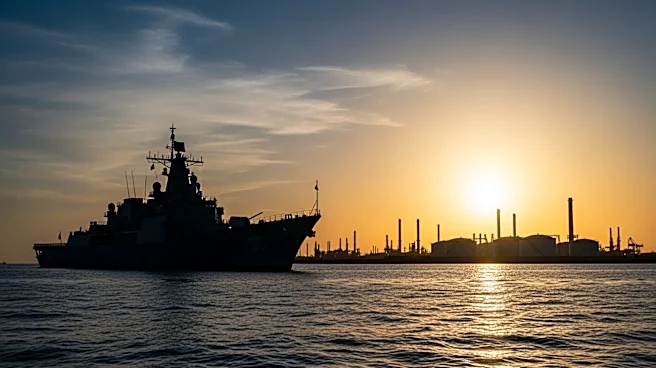
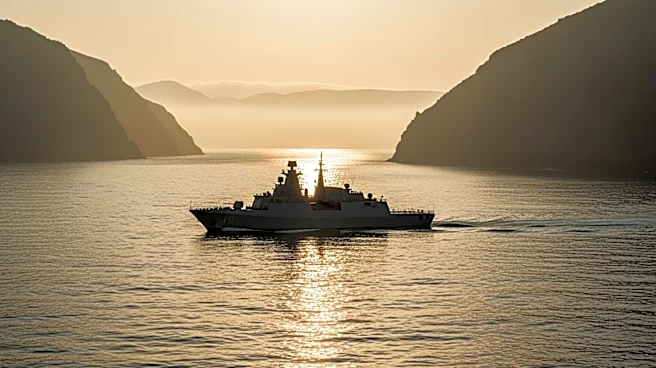
The U.S. Navy has initiated a strategic plan involving the passage of two Arleigh Burke-class guided missile destroyers, USS Frank E. Peterson and USS Michael Murphy, through the Strait of Hormuz. This move is part of a broader effort by Central Command
to address potential threats in the region, particularly concerning mine-laying activities by Iran. The plan includes a potential enforced closure of the Strait to facilitate a mine-clearing operation, aiming to ensure safe passage for international shipping. The situation remains tense as Iran has cited technical reasons for delaying the reopening of the Strait, complicating diplomatic efforts.
Why It's Important?
The Strait of Hormuz is a critical chokepoint for global oil transportation, and any disruption can have significant economic repercussions worldwide. The U.S. Navy's actions reflect the strategic importance of maintaining open and secure shipping lanes in the region. The potential closure of the Strait for mine-clearing operations could put economic pressure on Iran, as it relies heavily on oil exports. This development highlights the ongoing geopolitical tensions in the Middle East and the delicate balance of power that the U.S. and its allies must navigate to ensure regional stability and economic security.
What's Next?
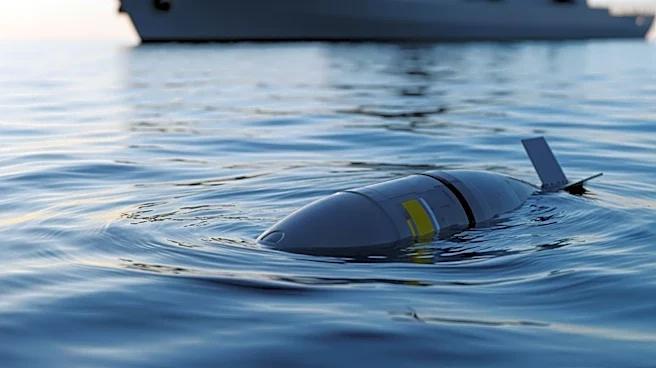
The next steps involve the U.S. and its allies potentially implementing a complete ban on ship movements in the Strait to facilitate mine-clearing operations. This could lead to increased diplomatic efforts to resolve the situation peacefully, although the risk of escalation remains. The international community will be closely monitoring the situation, as any prolonged disruption could impact global oil prices and economic stability. The U.S. may also seek to collaborate with other nations, such as the UK, to deploy advanced mine-clearing technologies and ensure the safety of maritime operations in the region.