





What's Happening?
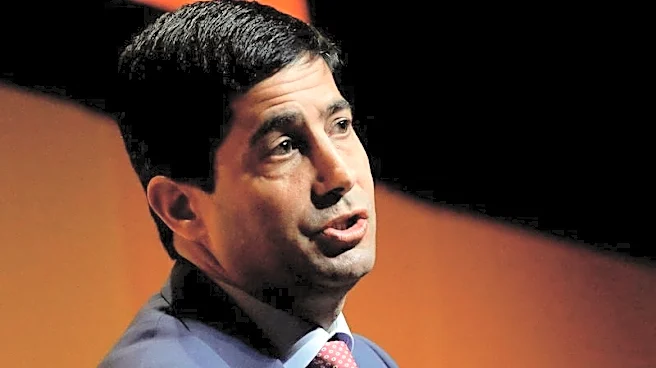
Kevin Warsh, nominated by President Trump to lead the Federal Reserve, has disclosed financial assets exceeding $100 million. The disclosure is part of the nomination process, requiring Senate approval. Warsh's assets include significant investments in the Juggernaut
Fund LP and consulting fees from Stanley Druckenmiller's investment office. The document, filed with the U.S. Office of Government Ethics, outlines various holdings, including those in artificial intelligence and cryptocurrency sectors. Warsh has pledged to divest certain assets to comply with the Ethics in Government Act if confirmed. His spouse, Jane Lauder, also has substantial holdings, including municipal bonds valued over $1 million. The Senate Banking Committee has yet to schedule a hearing for Warsh's confirmation, and a key Republican lawmaker has indicated plans to block the nomination pending a Department of Justice investigation into current Fed Chair Jerome Powell.
Why It's Important?
Warsh's nomination is significant as it could influence the Federal Reserve's future policies, impacting the U.S. economy. His extensive financial holdings, particularly in emerging sectors like AI and crypto, highlight potential conflicts of interest that require divestment. The nomination process is further complicated by political dynamics, including a DOJ investigation into Powell, which could delay Warsh's confirmation. The outcome of this nomination could affect monetary policy, interest rates, and economic stability, with implications for financial markets and economic stakeholders.
What's Next?
The Senate Banking Committee must review Warsh's nomination, with a hearing potentially scheduled soon. The confirmation process may face delays due to political opposition and ongoing investigations. If confirmed, Warsh's leadership could shift the Federal Reserve's approach to economic challenges. Meanwhile, Powell may continue as interim chair if Warsh's confirmation is not finalized by May 15. The situation remains fluid, with potential impacts on U.S. monetary policy and economic strategy.