




What's Happening?
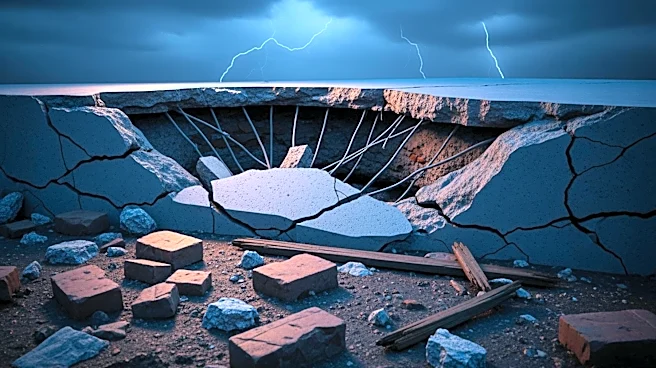
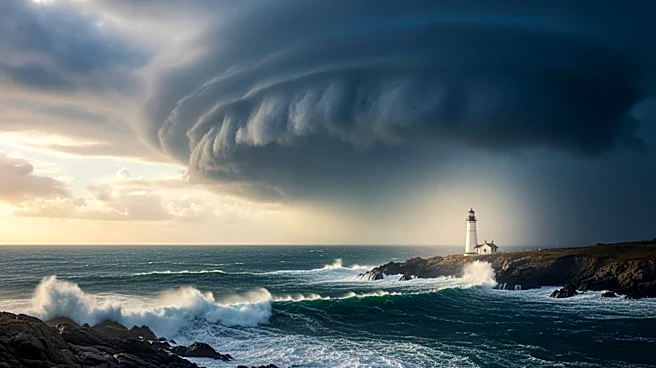
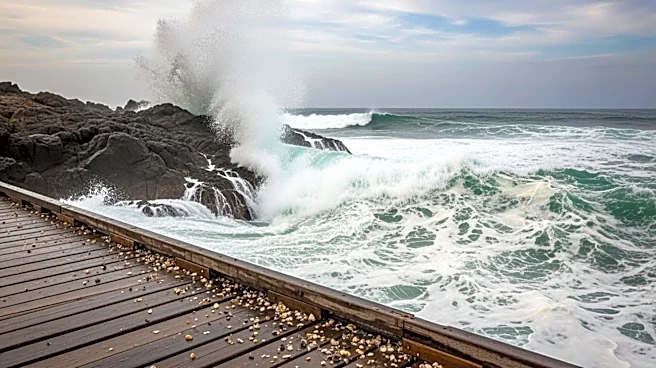
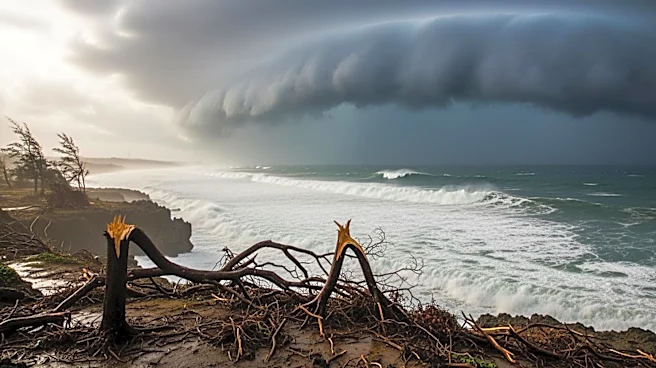
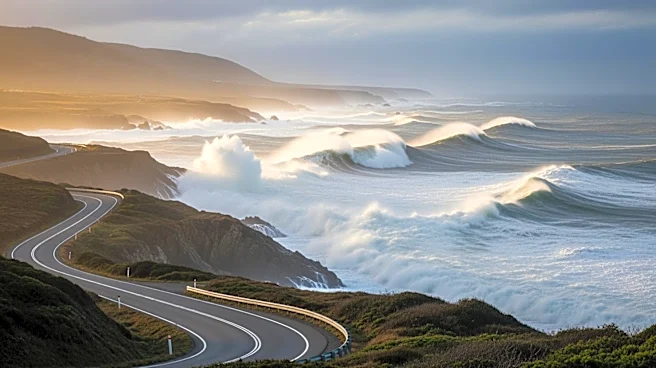
In Wellington, New Zealand, authorities have evacuated hundreds of residents from seaside homes as 11-meter waves battered the coast. The evacuation was ordered by Wellington Mayor Andrew Little, who declared a state of emergency for areas including Owhiro
Bay, Island Bay, Houghton Bay, and Breaker Bay. The evacuation was enforced by police to ensure residents moved to higher ground, with road cordons set up to prevent access to the coast. The waves, measured at 11 meters by New Zealand's MetService, are significantly higher than those in a similar 2021 event. The severe weather also caused disruptions at Wellington Airport, where wind gusts reached 128 kilometers per hour, leading to flight cancellations and a small plane being tipped over.
Why It's Important?
The evacuation highlights the increasing frequency and severity of extreme weather events, which pose significant risks to coastal communities. The situation in Wellington underscores the need for robust emergency preparedness and response strategies to protect lives and property. The impact on Wellington Airport, including flight cancellations and damage to aircraft, also illustrates the broader economic implications of such natural disasters. This event may prompt discussions on climate resilience and infrastructure improvements to mitigate future risks.
What's Next?
Authorities will likely assess the damage and review emergency response protocols to improve future preparedness. The event may lead to increased investment in coastal defenses and infrastructure to withstand similar occurrences. Additionally, there may be calls for more comprehensive climate change adaptation strategies at both local and national levels. The situation could also influence policy discussions on environmental protection and sustainable urban planning.