





What's Happening?
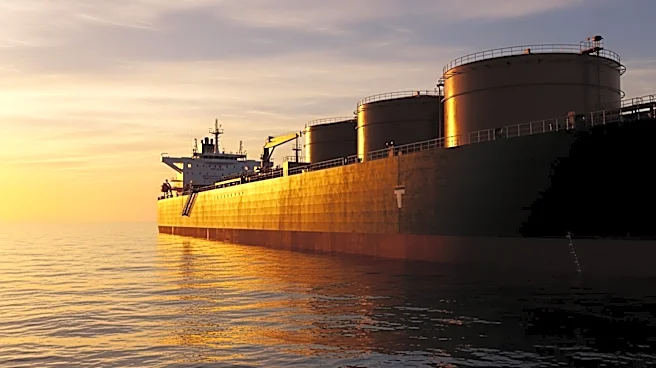
An oil cargo delivered to the Philippines, initially identified as originating from Iran, has been confirmed to be from Russia. The shiptracking firm Kpler revised its data, indicating that the Suezmax tanker Ocean Start delivered Urals crude from Russia to Petron's
Bataan refinery on May 17. This revision followed a review of additional information on the voyage. The cargo was transferred via a ship-to-ship (STS) operation in waters off Singapore from the Suezmax ship Caruzo, which had loaded at Russia's Sheskharis in late March. Previously, Kpler had reported that the cargo was received from the tanker Kylo, which loaded the crude at Iran's Kharg Island. Another analytics firm, Vortexa, maintains that the cargo was Iranian crude delivered by the Ocean Start following an STS transfer from the Noxen, which shares the same IMO number as Kylo. Petron, the largest oil company in the Philippines, has not commented on the matter.
Why It's Important?
This development highlights the complexities and challenges in tracking and verifying the origins of oil shipments, which have significant implications for international trade and sanctions compliance. The initial misidentification of the cargo's origin underscores the difficulties faced by companies and governments in enforcing sanctions, particularly those related to Iranian oil. The situation also reflects the geopolitical tensions and economic strategies at play, as countries navigate sanctions and seek alternative sources of energy. The Philippines' reliance on Middle Eastern crude imports and the U.S. waiver to purchase Russian oil further illustrate the intricate balance of energy needs and diplomatic relations. This incident could influence future policies and practices in oil trade and sanctions enforcement.
What's Next?
The ongoing discrepancies in data from different analytics firms may prompt further investigations and reviews of shiptracking methodologies. Companies involved in oil trade might enhance their due diligence processes to ensure compliance with international sanctions. Additionally, the situation could lead to increased scrutiny of oil shipments and their origins by regulatory bodies. The Philippines and other countries may continue to seek waivers or alternative sources of energy to mitigate the impact of geopolitical tensions on their energy security. The outcome of these developments could shape future trade relations and energy policies.