






What's Happening?
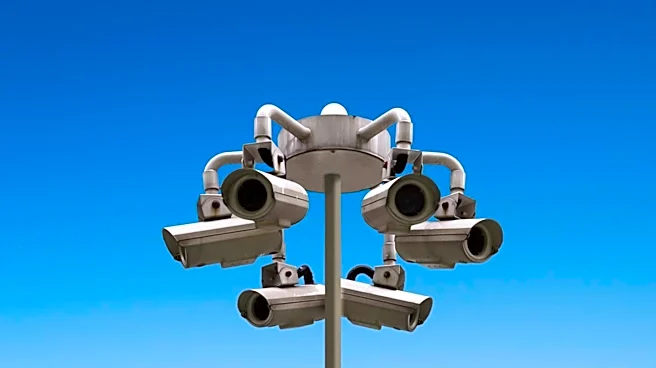
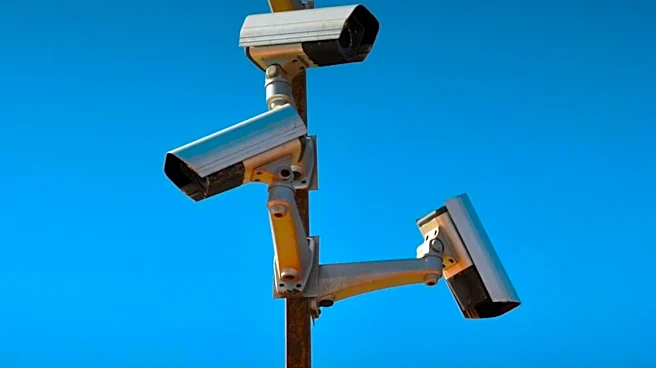
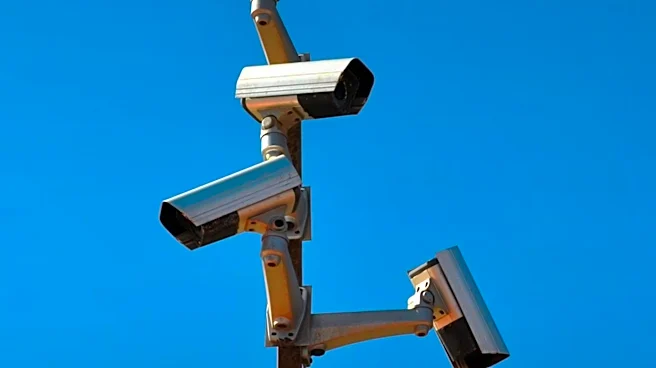
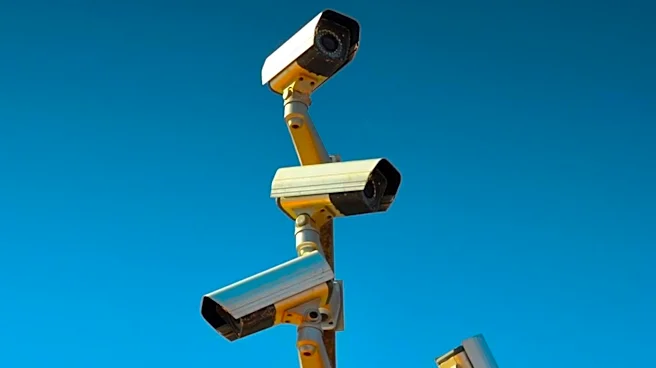
Utah lawmakers are preparing a bill to strengthen privacy regulations for automated license plate readers, commonly known as Flock cameras, ahead of the legislative session. This move comes amidst growing concerns from Utah leaders, including Governor
Spencer Cox, and privacy advocates regarding potential misuse of the technology. Governor Cox expressed deep concern over an investigation by the Utah Civic Compact, which found that nearly 97% of searches in Weber County's Flock database originated from law enforcement agencies outside Utah. Current Utah law restricts searches to active criminal investigations, outstanding warrants, missing persons, or stolen vehicles. While acknowledging the value of these cameras for law enforcement, Senator Calvin Musselman, chair of the Law Enforcement and Criminal Justice Interim Committee, stated that the proposed bill aims to balance public safety with legitimate privacy concerns.
Why It's Important?
The debate over Flock camera regulations highlights a critical tension between public safety and individual privacy rights in the digital age. The reported misuse, where out-of-state agencies accessed local data, raises significant questions about data governance, inter-agency data sharing protocols, and the potential for surveillance overreach. For Utah residents, the proposed legislation could offer stronger protections against unwarranted tracking and data exploitation. For law enforcement, while the technology is a valuable tool, stricter regulations might impact operational flexibility. This situation also underscores the broader national conversation about how rapidly evolving surveillance technologies are integrated into society and the necessary legal frameworks to prevent abuse, ensuring that technological advancements do not erode fundamental civil liberties.
What's Next?
The Utah Privacy Governing Board and the Utah Privacy Commission, at Governor Cox's request, are conducting a comprehensive review of existing regulations and local agency usage of Flock cameras. Christopher Bramwell, Utah's chief privacy officer, indicated that this review aims to objectively gather facts to distinguish between system capabilities, actual features, and law enforcement practices. The findings from this review will likely inform the specifics of the upcoming legislative bill. Law enforcement groups, such as the Utah Law Enforcement Legislative Committee (ULELC), have expressed commitment to responsible use of the technology and advocate for solutions that protect both public safety and individual rights. The legislative session will see lawmakers deliberate on the proposed bill, potentially leading to new statewide standards for the deployment and use of automated license plate readers.
Beyond the Headlines
The controversy surrounding Flock cameras in Utah extends beyond immediate privacy concerns, touching upon the broader implications of ubiquitous surveillance and data interoperability across jurisdictions. The fact that nearly all external searches in one county's database came from out-of-state agencies reveals a potential loophole or lack of oversight in data-sharing agreements, raising questions about data sovereignty and accountability. This situation could prompt a re-evaluation of how data collected by local law enforcement is shared and accessed by external entities, potentially leading to more stringent inter-state data-sharing protocols. Furthermore, the discussion highlights the challenge of regulating technologies that have diverse applications beyond traditional law enforcement, such as in higher education and port authorities, suggesting a need for a more comprehensive and unified approach to data privacy across various governmental and quasi-governmental sectors. Utah's existing comprehensive government data privacy law positions it uniquely to lead in developing robust frameworks for these emerging challenges.