

What's Happening?
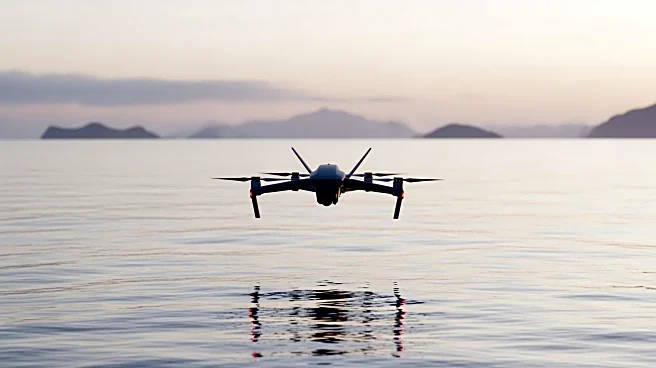
China has been conducting regular flights of a large military drone over the South China Sea, using false transponder signals to disguise the aircraft as other planes, including a Belarusian cargo plane and a British Typhoon fighter jet. These operations,
which have been ongoing since August, represent a new tactic in China's grey-zone strategy, potentially serving as a rehearsal for a conflict involving Taiwan. The flights, which have been tracked using the call sign YILO4200, often follow paths from Hainan province towards the Philippines and Vietnam. Analysts suggest these activities are part of China's efforts to enhance its military readiness and could be used to create confusion or conceal surveillance operations.
Why It's Important?
The use of deceptive tactics in the South China Sea highlights China's growing military capabilities and its strategic focus on Taiwan. These operations could complicate regional security dynamics, as they may be intended to test responses from other countries and assess the effectiveness of electronic warfare techniques. The potential for misidentification or confusion during a conflict could have significant implications for regional stability and international relations, particularly with the United States and its allies, who have vested interests in maintaining freedom of navigation in the area.
What's Next?
The international community, especially countries in the Indo-Pacific region, may need to enhance their surveillance and response capabilities to address the challenges posed by such deceptive tactics. Diplomatic efforts to address tensions in the South China Sea and prevent escalation will be crucial. The U.S. and its allies might also consider strengthening their military presence and cooperation in the region to deter potential aggression and ensure stability.