



What's Happening?
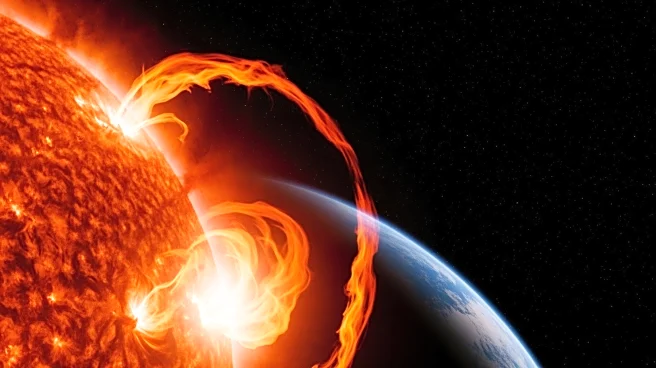
A strong solar flare, classified as an X1.1 flare, erupted from the Sun, peaking at 12:01 a.m. on December 8, 2025. Captured by NASA's Solar Dynamics Observatory, this flare is part of the most intense class of solar flares. Solar flares can disrupt radio
communications, electric power grids, and navigation signals, posing risks to spacecraft and astronauts. NASA, in collaboration with NOAA's Space Weather Prediction Center, monitors these events to assess potential impacts on Earth and provide forecasts, watches, warnings, and alerts.
Why It's Important?
Solar flares like the recent X1.1 event can have significant implications for technology and infrastructure on Earth. Disruptions to radio communications and power grids can affect various sectors, including aviation, maritime, and emergency services. The potential impact on navigation systems could also influence transportation and logistics. Additionally, solar flares pose risks to satellites and astronauts, necessitating protective measures and contingency planning. Understanding and predicting space weather events are crucial for mitigating their effects and ensuring the resilience of critical systems.