




What's Happening?
The Inter-American Development Bank (IDB) has approved a $60 million loan aimed at reducing flood risks and enhancing resilience for residents in Goiânia, Brazil. This initiative is part of the IDB Group's 'Ready and Resilient Americas' program and aligns
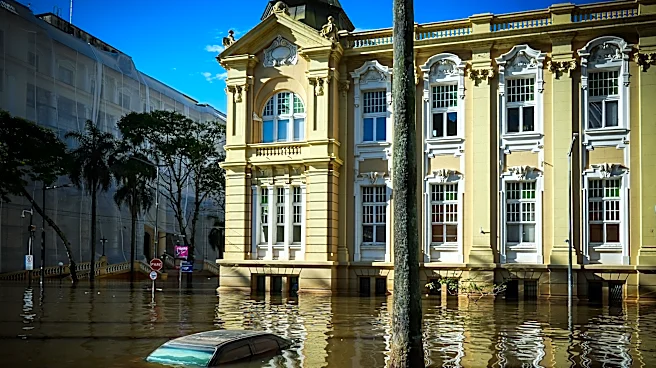
with its 'South Connection' program, which supports connectivity, trade, and sustainable growth in South America. The project will concentrate on the Macambira-Anicuns Basin, an area prone to flooding, and will involve improvements in urban drainage and solid waste management. Approximately 90,000 residents in the basin are expected to directly benefit from these measures. Additionally, nearly 65,000 people will gain access to new parks, green areas, and public spaces, while the city's 1.5 million residents will benefit from expanded early warning system coverage and improved urban drainage management. This is the second project under a Conditional Credit Line for Investment Projects approved by the IDB in 2025, designed to improve socio-environmental, socioeconomic, and public health conditions in Brazil.
Why It's Important?
This IDB loan is significant as it addresses critical infrastructure and public health challenges in a major Brazilian city, directly impacting the quality of life for hundreds of thousands of residents. By focusing on flood risk reduction and urban resilience, the project aims to mitigate the economic and social disruptions caused by natural disasters, which are increasingly prevalent due to climate change. The investment in urban drainage, solid waste management, and green spaces contributes to sustainable urban development, fostering healthier living environments and potentially reducing healthcare burdens. The provision of comprehensive support for families requiring resettlement, including housing solutions and compensation, highlights a commitment to equitable development. Furthermore, strengthening the operational capacity of Goiânia's municipal environmental agencies will enhance local governance and long-term sustainability of these improvements, setting a precedent for other urban centers facing similar challenges in Latin America.
What's Next?
The $60 million loan, which has a 24.5-year repayment term including a six-year grace period and an interest rate based on SOFR, requires completion of procedures under Brazilian law before it can be signed and implemented. Once operational, the project will proceed with financing drainage infrastructure, linear parks, and other urban improvements within the Macambira-Anicuns Basin. The program also includes $15 million in local counterpart financing, indicating a shared commitment to its success. Future steps will involve the implementation of flood monitoring and early warning systems, which will extend the benefits of the infrastructure work beyond the directly invested neighborhoods. The strengthening of municipal environmental agencies will ensure ongoing management and maintenance of the new systems, aiming for sustained improvements in flood control and urban resilience for Goiânia's population.
Beyond the Headlines
The IDB's investment in Goiânia extends beyond immediate flood mitigation, touching upon broader themes of climate resilience and sustainable urban planning in Latin America. This project exemplifies a growing trend among international financial institutions to integrate environmental and social considerations into development financing. The emphasis on green spaces and public health improvements reflects a holistic approach to urban development, recognizing the interconnectedness of infrastructure, environment, and human well-being. The support for municipal capacity building is crucial for ensuring that the benefits of such projects are long-lasting and that local governments are equipped to manage future environmental challenges. This initiative could serve as a model for other cities in the region grappling with the impacts of climate change and rapid urbanization, highlighting the importance of proactive investment in resilient infrastructure and governance.