





What's Happening?
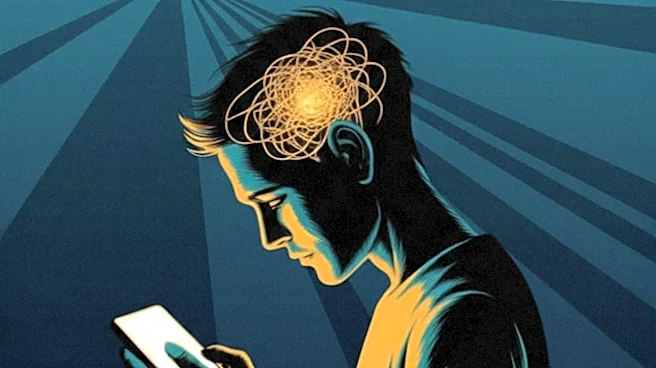
Psychology experts are highlighting the significant role of social media's comparison culture in the increasing rates of teen anxiety. According to Notre Dame de Namur University (NDNU), platforms like Instagram and TikTok present carefully curated images
of idealized lives, leading young people to make upward comparisons. This phenomenon, rooted in Leon Festinger's social comparison theory from the 1950s, has been amplified by social media, allowing teenagers to compare themselves against thousands of peers, celebrities, and influencers. Such frequent upward comparisons are associated with lower self-esteem and greater emotional distress. The U.S. Surgeon General's 2023 advisory on social media and youth mental health noted that adolescents spending over three hours daily on social media face approximately double the risk of experiencing symptoms of depression and anxiety. While social media offers benefits like connection, it also poses risks such as constant evaluation, fear of missing out (FOMO), disrupted sleep, cyberbullying, and pressure to appear perfect.
Why It's Important?
The pervasive influence of social media on adolescent mental health has profound implications for U.S. society, impacting public health, education, and family dynamics. The rise in teen anxiety and depression linked to comparison culture places a greater burden on mental health services and educational institutions, which must adapt to support young people navigating these digital pressures. Parents and educators are challenged to foster media literacy and healthier digital habits to mitigate negative effects. The long-term societal impact could include a generation with higher rates of mental health issues, affecting productivity, social engagement, and overall well-being. Understanding these influences is crucial for future psychology professionals, as highlighted by NDNU's School of Psychology, which emphasizes an integrative approach to address the complex interplay of emotional, relational, cultural, and biological factors in mental health.
What's Next?
Addressing the growing concern of social media's impact on teen mental health will require a multi-faceted approach involving parents, educators, and mental health professionals. Parents are encouraged to initiate open conversations about online experiences, discuss the curated nature of social media content, and establish healthy device routines. Educators can integrate media literacy into curricula, teaching students to critically evaluate online portrayals and understand algorithms. Teenagers themselves are advised to cultivate healthier digital habits, such as following positive accounts, taking breaks, and engaging in offline activities. Mental health professionals will continue to investigate the relationship between social media use and mental health, providing support for those experiencing distress. NDNU's School of Psychology is preparing future professionals to understand these evolving challenges, emphasizing an integrative approach to mental health education.
Beyond the Headlines
The issue extends beyond immediate mental health symptoms, touching upon deeper ethical and cultural dimensions. The constant exposure to idealized lives on social media can distort young people's perceptions of success, identity, and belonging, potentially leading to a generation with unrealistic expectations and a diminished sense of self-worth. This digital comparison culture also raises questions about the responsibility of social media platforms in safeguarding user well-being, particularly for minors. The emphasis on 'highlight reels' can foster a culture of inauthenticity, where individuals feel compelled to present a perfect online persona, creating a disconnect between their digital and real-world selves. This phenomenon could lead to long-term shifts in how identity is formed and how individuals cope with perceived imperfections, potentially increasing reliance on external validation and impacting resilience.