







What's Happening?
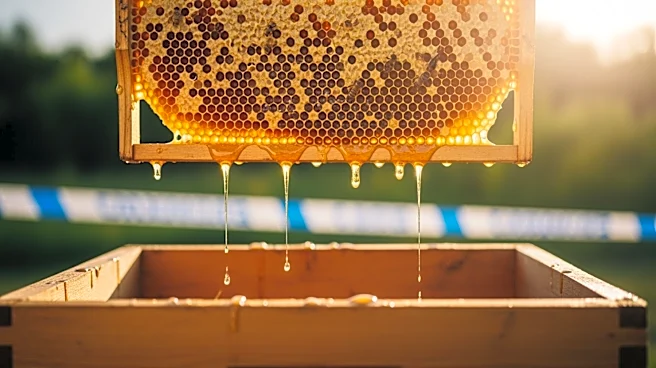
Anthony Ondo, a senior at Chatham University studying sustainable business, has taken an unconventional route to fund his college tuition by managing a 50-hive apiary in western Pennsylvania. Ondo harvests honey twice a year and sells it to cover his educational
expenses. Despite having some scholarship support and a small federal loan, the majority of his tuition is paid through his beekeeping business. Ondo discovered his passion for beekeeping after assisting a friend's grandfather with honey harvesting. Since launching his business in 2024, Ondo has expanded his operations by negotiating with property owners to place hives in their backyards, often compensating them with honey. He also collaborates with local farms and businesses to distribute his honey.
Why It's Important?
Ondo's initiative highlights the growing trend of students seeking alternative methods to finance their education amidst rising tuition costs. His success underscores the potential of entrepreneurship in providing financial independence and practical experience. Ondo's business not only supports his education but also contributes to local economies and promotes sustainable practices. This approach aligns with broader educational goals of fostering innovation and sustainability among students, as emphasized by Chatham University's Falk School of Sustainability and Environment. Ondo's story serves as an inspiration for students to explore creative solutions to financial challenges while pursuing their passions.
What's Next?
Ondo plans to continue expanding his beekeeping business by increasing the number of hives and exploring new distribution channels. His involvement with Chatham University's Eden Hall campus, where he oversees additional apiaries, provides a platform for further growth and collaboration. Ondo's future endeavors may include educating others about the importance of local honey and sustainable practices, potentially leading to new partnerships and opportunities within the community. As Ondo graduates, his business model could inspire other students to pursue similar entrepreneurial ventures.
Beyond the Headlines
Ondo's story reflects a broader cultural shift towards valuing sustainability and environmental stewardship. His business not only addresses personal financial needs but also contributes to ecological health by supporting bee populations, which are crucial for pollination and biodiversity. This case exemplifies how individual entrepreneurship can align with global environmental goals, encouraging a new generation to integrate sustainability into their careers. Ondo's success may prompt educational institutions to further support student-led initiatives that combine business acumen with ecological responsibility.